
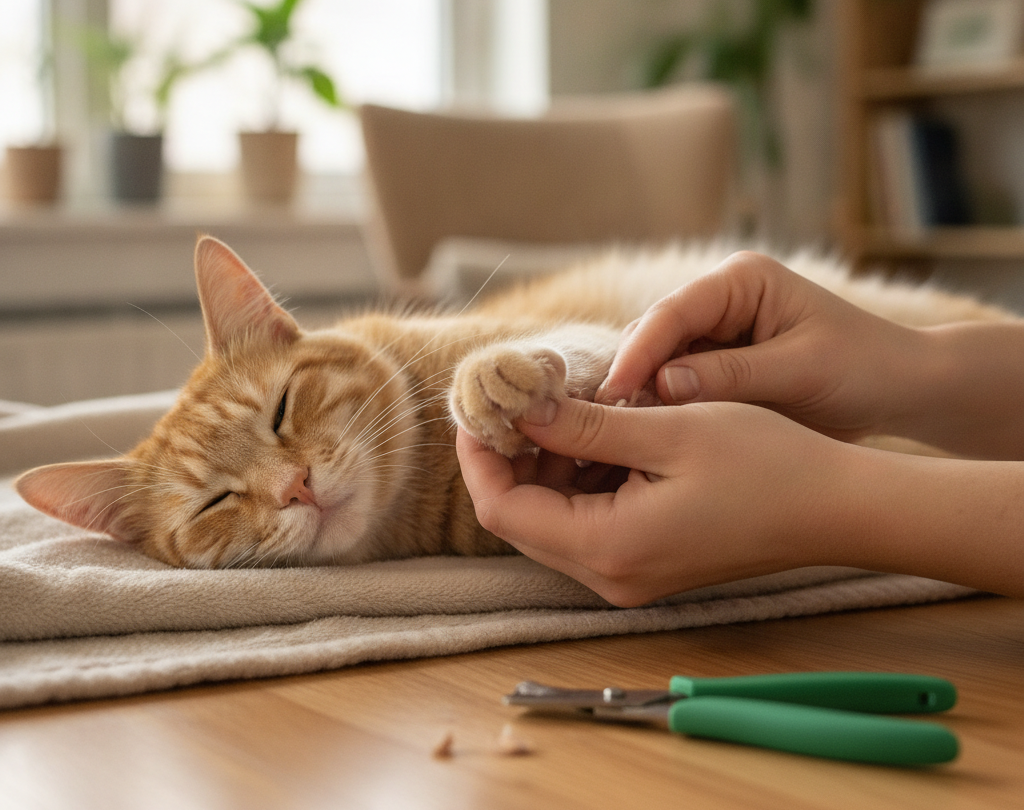
Trimming your cat’s nails at home can feel intimidating, but with a calm approach and the right technique, it’s a routine task you can master. The key is to understand your cat’s anatomy, specifically where the ‘quick’ is, to prevent pain or bleeding. We’ll guide you through each step, from gathering your tools to making the cut, ensuring a low-stress experience for both you and your feline friend. You’ll learn how to safely manage their claws and keep them comfortable between vet visits.
Table of Contents
Key Takeaways
- Always identify the pink quick before cutting to avoid pain and bleeding.
- Take it slow, trimming just a few nails per session if your cat gets restless.
- Keep styptic powder or cornstarch nearby as a precaution against minor nicks.
Gather Your Supplies and Choose the Right Time
Setting yourself up for success begins with preparation. Ensure you have the right tools and select a moment when your cat is most receptive to handling.
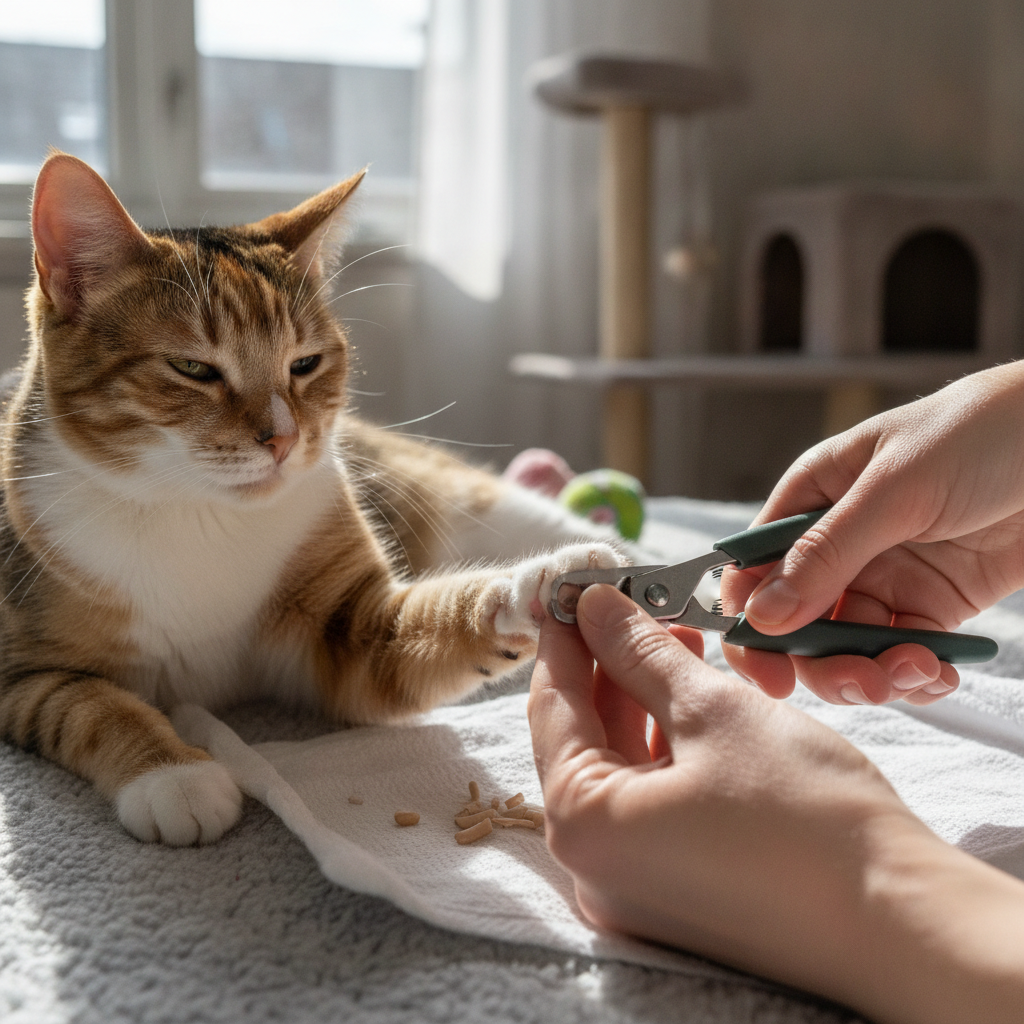
- Select proper feline-specific clippers. These come in scissor-style or guillotine designs. Choose the one you find easiest to handle and that your cat tolerates best. Avoid using human nail clippers, as they can split a cat’s nail.
- Have styptic powder ready. This is crucial for stopping minor bleeding if you accidentally cut too close to the quick. If you don’t have styptic powder, cornstarch can serve as a temporary alternative.
- Wait until your cat is naturally sleepy or calm. The ideal time is often after a meal, during a nap, or when they are relaxed in your lap. Avoid times when they are playful or agitated, as this will make the process much harder.
How to Hold Your Cat and Extend the Nail
Gentle handling is paramount to a stress-free nail trimming experience. Your goal is to be secure without being forceful.

- Use a gentle lap hold or wrap the cat loosely in a towel. If your cat is prone to wriggling, a towel wrap (sometimes called a “purrito”) can keep them secure while leaving one paw exposed. For calmer cats, simply holding them comfortably in your lap often works best.
- Gently press the top of a toe and the pad below to extend the claw fully. This action pushes the nail out from its sheath, making the quick more visible and the cutting area accessible.
- Release immediately and offer praise if the cat shows signs of agitation. It’s better to trim fewer nails and keep the experience positive than to force the issue and create a negative association. Take a break and try again later.
Locating the Quick and Making the Cut
Understanding the anatomy of your cat’s claw is the most critical step to prevent injury. The quick is a sensitive area you must avoid.
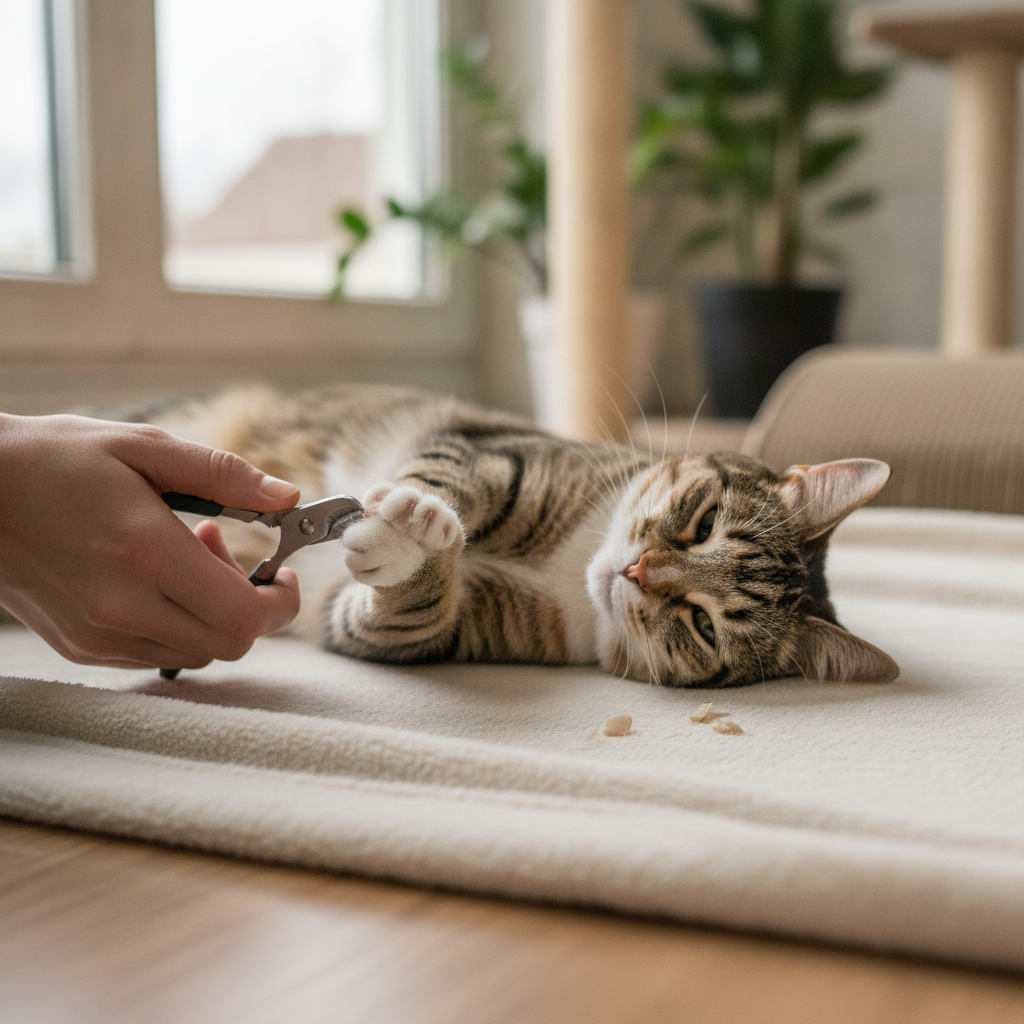
- Look for the pink fleshy part inside the translucent claw, known as the quick. For cats with clear or light-colored nails, you’ll see a distinct pink or red area. This is where blood vessels and nerve endings are located.
- Aim to cut only the clear tip a few millimeters away from the pink quick. You want to remove only the sharp, clear hook at the end of the nail. If your cat has dark nails, where the quick is not visible, trim off only the very tip, where the nail starts to curve. When in doubt, trim less.
- Never cut into the quick, as it contains blood vessels and nerve endings. Cutting the quick is painful for your cat and will cause bleeding. Even a slight nick can be uncomfortable and make your cat reluctant to have their nails trimmed in the future.
Handling Mistakes and Stopping Minor Bleeding
Even with the utmost care, accidents can happen. Knowing how to react calmly will prevent further stress for your cat.
- Stay calm so you do not startle your cat further if a minor nick happens. Your calm demeanor will help your cat remain as relaxed as possible during a mishap.
- Apply styptic powder or cornstarch with gentle pressure to stop bleeding. Press the powder directly onto the bleeding nail tip and hold it firmly for several seconds. The bleeding should stop fairly quickly.
- Contact your veterinarian if bleeding does not stop after a few minutes. While rare for minor nicks, persistent bleeding could indicate a deeper issue or require professional attention.
Positive Reinforcement and Future Maintenance
Making nail trims a positive experience is key to long-term success and cooperation from your cat.
- Reward your cat with a favorite treat or praise immediately after the session. This helps them associate nail trimming with good things, making future sessions easier.
- Check claws every two to four weeks for routine maintenance. The frequency depends on your cat’s activity level and how quickly their nails grow. Regular trims prevent nails from becoming too long, overgrown, or painfully curling into paw pads.
- Provide appropriate scratching posts to help naturally wear down outer nail layers. While scratching posts don’t eliminate the need for trimming, they are vital for your cat’s paw health and natural behaviors. Ensure you have posts with various textures and orientations (vertical and horizontal).
Frequently Asked Questions
How often should I trim my indoor cat’s nails?
Most indoor cats need their nails trimmed every two to four weeks. Unlike outdoor cats who naturally wear down their claws, indoor cats require regular maintenance to prevent nails from becoming too long, sharp, or ingrown.
What should I do if my cat refuses to let me touch their paws?
Start with gradual desensitization. Gently touch their paws for a few seconds at a time, followed by a treat and praise. Slowly increase the duration and intensity of the touch. If your cat consistently resists, consult your veterinarian or a professional groomer for advice or assistance.
Can I use human nail clippers on a cat?
No, it’s best to avoid using human nail clippers. Human clippers are designed for flat nails and can pinch, crack, or split a cat’s curved nails, which can be painful and damaging. Always use clippers specifically designed for cats.
Is it normal for a cat to shed the outer layer of their claw?
Yes, it’s completely normal. Cats shed the outer layer of their claws, a process called “shedding the nail sheath.” This reveals a sharper, new claw underneath. You might find these clear, hollow nail sheaths near scratching posts or in your cat’s bedding.