If your normally social cat has suddenly disappeared under the bed, behind the couch, or into a closet, it’s natural to feel worried. Cats instinctually hide when they feel unsafe, unwell, or overwhelmed, a behavior rooted in their wild ancestors’ need to avoid predators when vulnerable. This sudden shift typically signals either a physical issue, like pain or illness, or a significant stressor in their environment. Observing recent changes in your home and your cat’s other behaviors can help you narrow down the potential cause.
Sudden behavior changes are easier to assess in context. Learn why cats meow more than usual and why a cat may sleep on you.
Table of Contents
Key Takeaways
- Sudden hiding often points to either a medical problem or environmental stress.
- Cats are masters at masking illness; hiding can be an early sign of discomfort or pain.
- Changes in your home, like new pets or loud noises, can trigger anxiety and hiding.
- Always observe your cat from a distance and avoid forcing them out of their hiding spot.
- Contact your veterinarian promptly if hiding is accompanied by other concerning symptoms or if it persists for more than a day or two without an obvious cause.
Medical Causes and Illness Red Flags
Cats are notoriously good at hiding discomfort or pain. In the wild, showing weakness makes them vulnerable to predators, so this instinct to mask vulnerability is deeply ingrained. When your cat suddenly starts hiding, especially if it’s unusual for them, it’s often their way of telling you something isn’t right physically.
Common medical culprits behind sudden hiding can range from subtle aches to more serious conditions. These might include urinary tract issues (like a UTI or bladder stones), dental pain, arthritis, injuries you can’t see, or systemic illnesses affecting their organs. Even mild nausea or a headache can make a cat seek quiet isolation.
Look for these accompanying red flags that strongly suggest a veterinary visit is needed:
- Changes in appetite or thirst: Eating less, refusing food, or drinking significantly more or less.
- Altered litter box habits: Straining to urinate, urinating outside the box, more frequent trips, or changes in stool consistency.
- Unusual vocalizations: Excessive meowing, howling, growling, or unusual quietness.
- Changes in grooming: Over-grooming (especially in one spot) or neglecting grooming altogether, leading to a dull or messy coat.
- Lethargy or weakness: Less energy, reluctance to move, or appearing weak or unsteady.
- Vomiting or diarrhea: Especially if persistent.
- Changes in demeanor: Becoming irritable, aggressive, or withdrawn when normally affectionate.
Environmental Stress and Anxiety Triggers
Even the most secure indoor cat can experience significant stress or anxiety that prompts them to seek refuge. Cats thrive on routine and predictability, so even small changes can be unsettling.

Common environmental stressors include:
- New additions to the household: A new pet, a baby, or even new human housemates can be very unsettling.
- Unfamiliar visitors: Guests, especially loud or active ones, can make a sensitive cat feel unsafe.
- Changes in furniture or layout: Rearranging furniture or bringing in new items can disrupt their sense of territory and safety.
- Loud or unusual noises: Construction nearby, thunderstorms, fireworks, or even loud parties can send a cat scurrying for cover.
- Changes in routine: A different feeding schedule, altered playtimes, or changes in your own daily presence can cause anxiety.
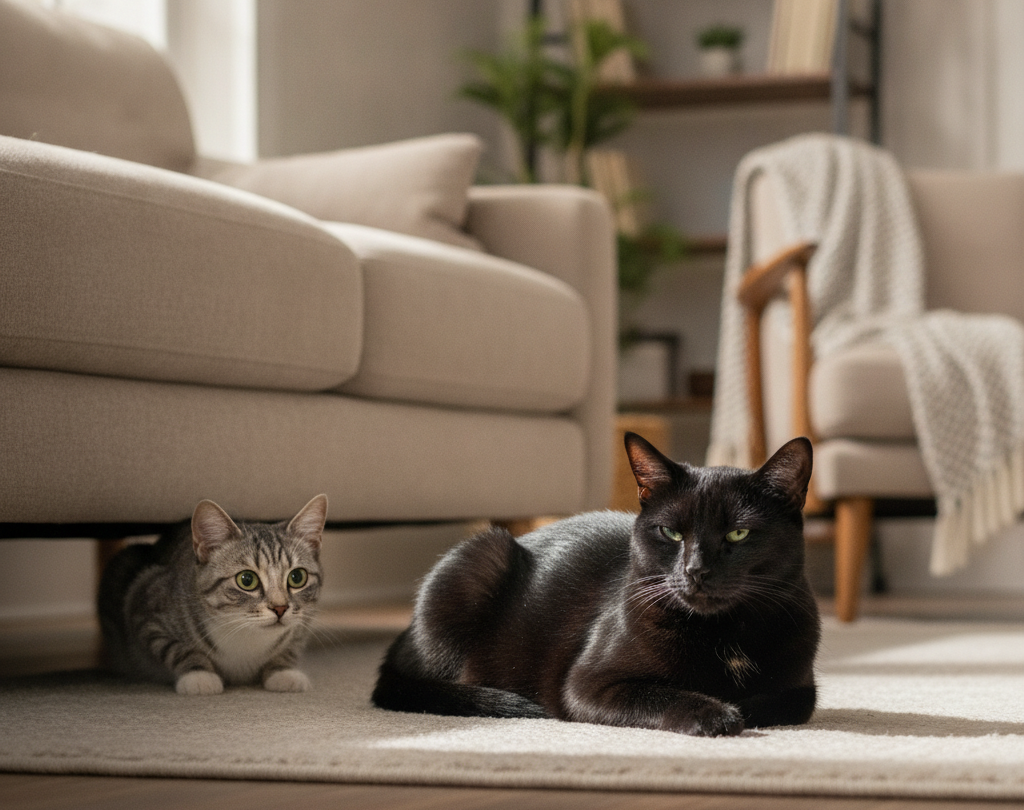
- Inter-cat tension: If you have multiple cats, new or escalating conflicts between them can make one cat feel unsafe in open areas, forcing them to hide.
- Conflict in the household: Human arguments or general tension in the home can also be picked up by sensitive cats, causing them stress.
When experiencing stress, a cat may hide to cope with their feelings, hoping the perceived threat will pass if they remain out of sight.
How to Assess the Situation Safely
When your cat is hiding, your first instinct might be to pull them out, but this can actually increase their fear or pain. It’s important to approach the situation calmly and respectfully.
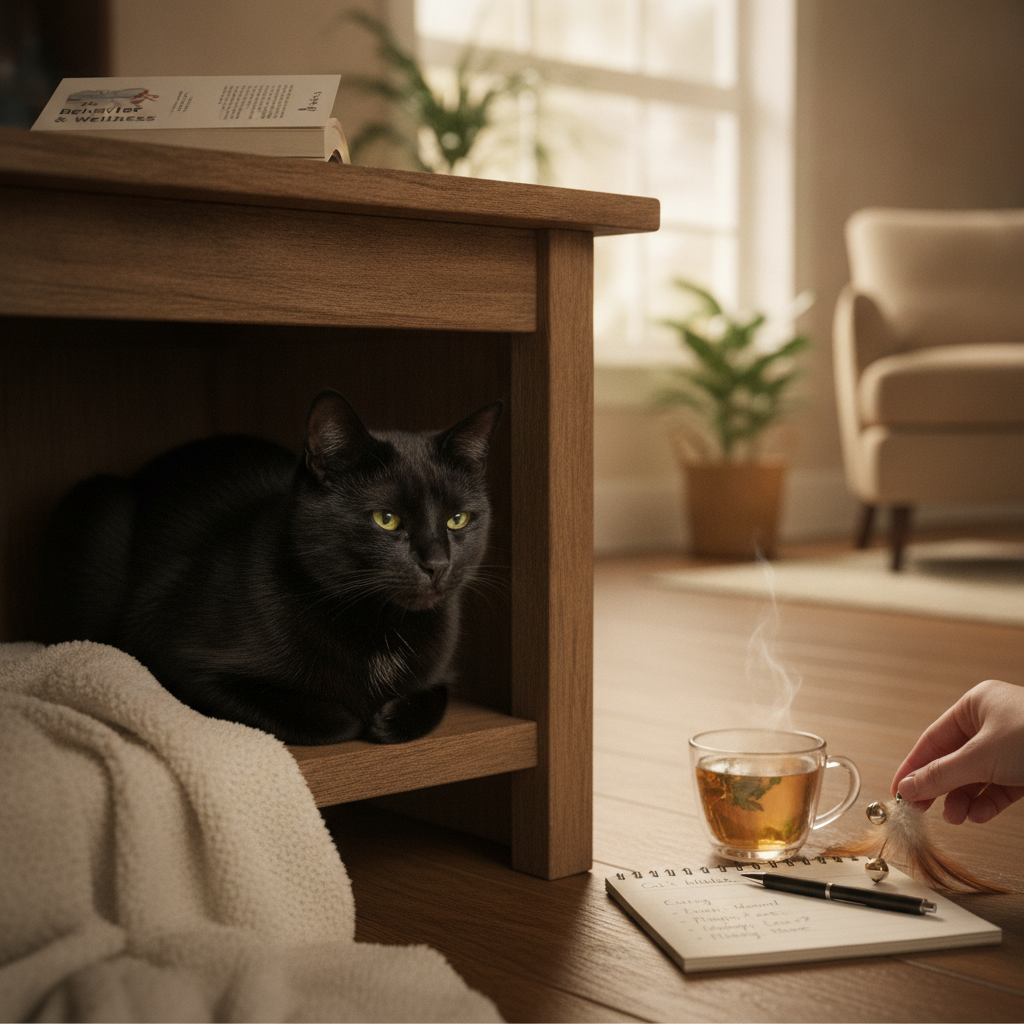
Instead, try these steps:
- Approach gently: Speak in a soft, reassuring voice. Move slowly and avoid making direct eye contact, which can be perceived as a threat.
- Observe from a distance: Check if your cat appears injured or if there’s an obvious source of discomfort. Is their breathing normal? Are they hunched over?
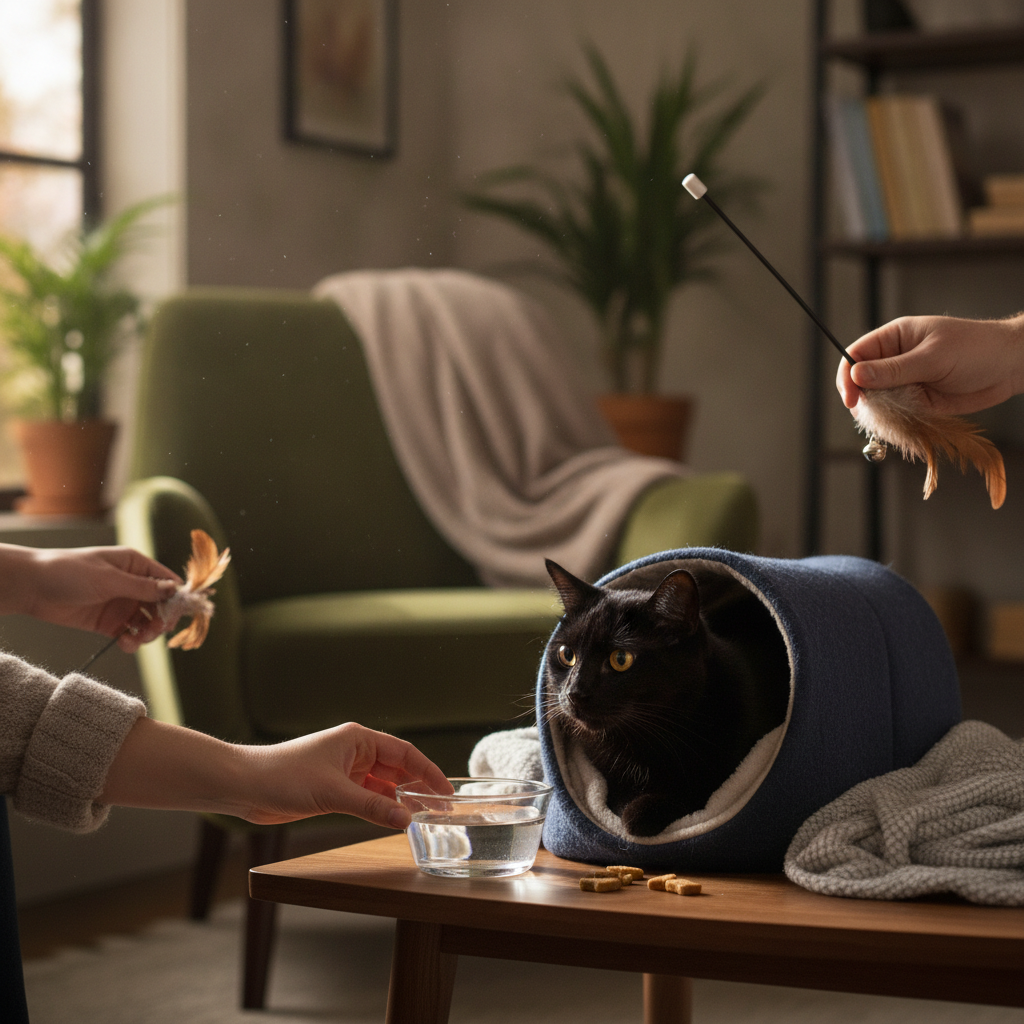
- Check essential resources: While you’re not looking, try to determine if they are still eating, drinking, and using their litter box. You might place a small amount of their favorite food or a bowl of water near their hiding spot to see if they emerge.
- Provide a safe space: Ensure their hiding spot is secure and dark. Consider adding a cozy blanket or one of your worn shirts for comfort.
- Do not force interaction: Never forcibly pull your cat out from their hiding spot unless there is an immediate, life-threatening emergency (like a fire or imminent danger). Forcing them out can cause extreme stress, injury, or even provoke an aggressive response from an otherwise gentle cat.
- Minimize noise and disturbance: Try to keep the environment around their hiding spot as quiet and calm as possible.
When to Contact Your Veterinarian
While occasional hiding can be normal, especially for new or shy cats, a sudden change in behavior warrants careful attention. Knowing when to call your veterinarian is crucial for your cat’s health and well-being.
Consult a vet immediately if:
- The hiding is accompanied by other severe symptoms like lethargy, difficulty breathing, limping, uncontrolled vomiting or diarrhea, straining to urinate (which can indicate a life-threatening blockage), or a refusal to eat or drink for more than 12-24 hours.
- Your cat cries out in pain when touched or moved.
- You suspect your cat has ingested something toxic or suffered an injury.
Schedule a checkup within 24 to 48 hours if:
- The hiding persists for more than a day or two without an obvious environmental trigger.
- You notice any of the “red flag” symptoms mentioned earlier, even if they seem mild.
- Your cat is unusually withdrawn or changes their normal routines, even if they eventually come out to eat.
A professional veterinary examination is the only way to rule out hidden injuries, internal illnesses, or underlying pain that might be causing your cat’s sudden change in behavior. Early intervention can make a significant difference in their recovery and comfort.
Frequently Asked Questions
Should I pull my cat out from their hiding spot?
No, generally you should avoid pulling your cat out of their hiding spot. Forcing them out can increase their stress, fear, or pain, and may even lead to an accidental bite or scratch if they lash out defensively. Instead, try to lure them out with a favorite treat or toy, or allow them to emerge on their own time while you quietly observe them.
How long is it normal for a cat to hide after a move?
After a significant environmental change like a move, it’s quite normal for a cat to hide for several days, or even a week or two, as they adjust to their new surroundings. Some shy cats might take even longer. Provide them with safe, quiet spaces, ensure their food, water, and litter box are easily accessible, and spend calm, reassuring time with them without forcing interaction. If they aren’t eating or drinking, or if the hiding persists unusually long, contact your vet.
What does it mean if my cat is hiding and not eating?
If your cat is hiding and also refusing to eat, this is a significant cause for concern and warrants immediate veterinary attention. Cats can develop serious liver problems (hepatic lipidosis) if they go without food for even a short period (24-48 hours). The lack of appetite combined with hiding often points to pain, severe illness, or extreme stress that needs professional diagnosis and treatment.
Can indoor cats suddenly become stressed?
Yes, absolutely. Indoor cats can become stressed by a variety of factors, even if they never go outside. Changes in the home environment, new people or pets, loud noises, a change in routine, or even subtle tensions among household members can all trigger stress and anxiety, leading to behavioral changes like sudden hiding.
When your cat suddenly starts hiding, it’s a clear signal that something has shifted in their world. By carefully observing their other behaviors and considering recent changes in your home, you can often narrow down whether the cause is medical, environmental, or both. Always err on the side of caution and consult your veterinarian if you have any concerns, especially if other symptoms are present or the hiding persists. Your quick attention and understanding can help your feline friend feel safe and well again.