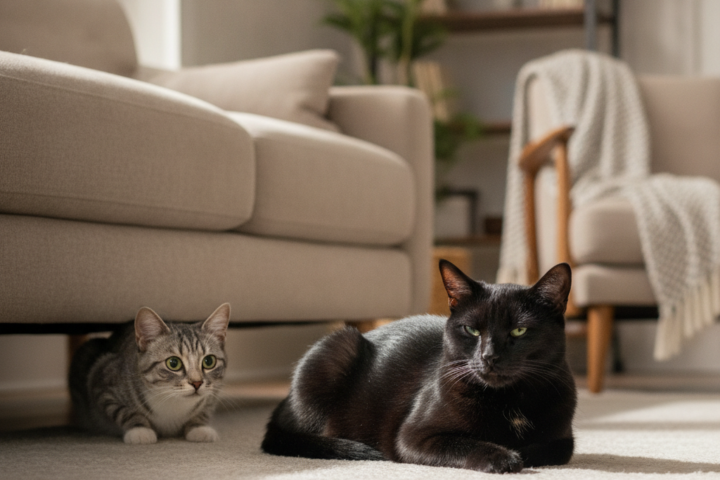
It can be frustrating to see your beloved cat scratch up furniture, but remember, this isn’t done out of spite. Scratching is a deeply ingrained natural behavior for cats, essential for their physical and mental well-being. The good news is you can absolutely guide your cat toward more appropriate scratching outlets. By understanding why they scratch and making smart adjustments to their environment, you can protect your furniture and keep your feline friend happy and healthy.
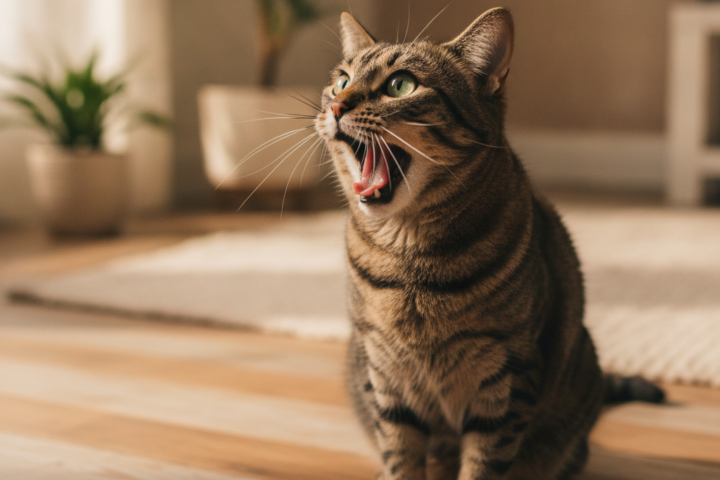
Scratching is one part of normal feline communication. Other common behaviors include kneading blankets for comfort and meowing more when a cat wants attention or feels stressed.
Table of Contents
Key Takeaways
- Cats scratch to maintain their claws, stretch, and mark territory.
- Provide a variety of appealing scratching surfaces (vertical and horizontal) in the right locations.
- Use temporary deterrents to make furniture unappealing during the training process.
- Enrich your cat’s environment with play and mental stimulation to reduce stress-related scratching.
- Regularly trim your cat’s claws to minimize potential damage.
Why Cats Scratch Furniture
Scratching is a fundamental part of being a cat, serving several important purposes. It’s not a misbehavior but a natural instinct deeply rooted in their biology.
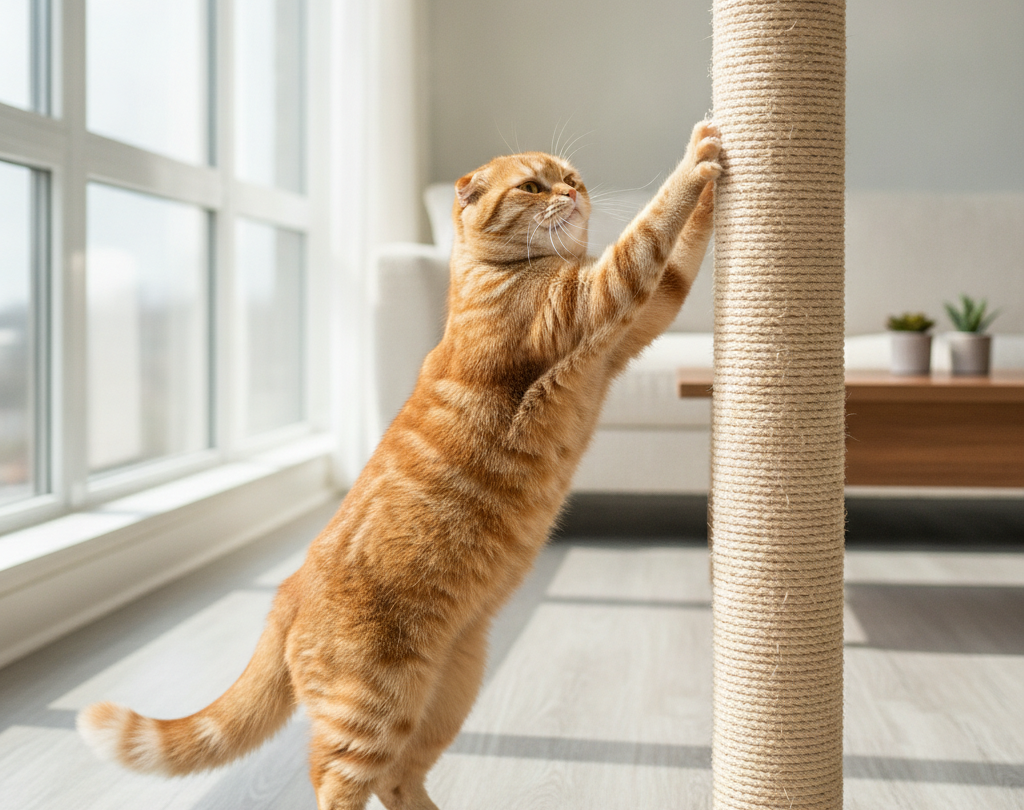
First, scratching helps cats maintain their claws. It allows them to remove the dead outer layers, revealing the sharp, healthy claws underneath. This process is often paired with a full-body stretch, which helps condition their muscles and keep them limber.
Beyond claw maintenance, scratching is also a form of communication. Cats have scent glands in their paws, and when they scratch, they leave behind their unique scent. This acts as a territorial marker, letting other cats know they’ve been there. Often, cats choose prominent spots like the arm of a couch because these areas are stable and carry the comforting scent of their favorite people, making them prime real estate for scent marking.
Provide Better Scratching Alternatives
The most effective way to stop your cat from scratching furniture is to offer them something better to scratch instead. The key is to provide scratching posts that are appealing, stable, and strategically placed.
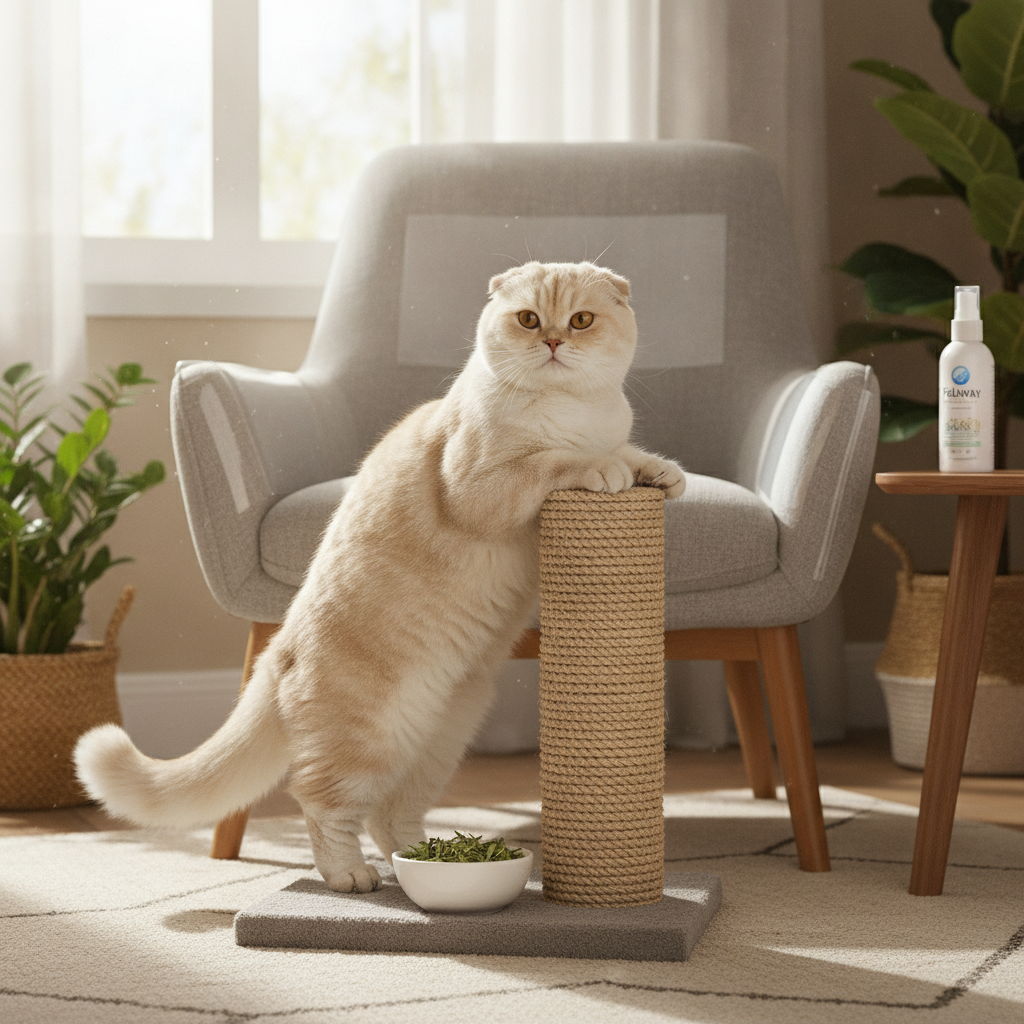
Offer a variety of surfaces and orientations. Some cats prefer vertical scratching, while others like to stretch out horizontally. Experiment with different materials like sisal rope, corrugated cardboard, or even carpeted posts. Sisal is often a favorite because it provides excellent resistance, mimicking tree bark.
Ensure any vertical scratching post is tall enough for your cat to stretch to their full height. It should also be sturdy and heavy so it doesn’t wobble or tip over when they use it vigorously. A wobbly post won’t be appealing and will quickly be abandoned for something more stable.
Placement is crucial. Put new scratching posts right next to the furniture your cat currently targets. Once they start using the post regularly, you can gradually move it to a more desired spot. Having multiple scratching options in different areas of your home can also be very helpful.
Use Temporary Furniture Deterrents
While you’re encouraging your cat to use their new scratching posts, it’s helpful to make your furniture temporarily unappealing. This creates a clear boundary and prevents them from reverting to old habits.
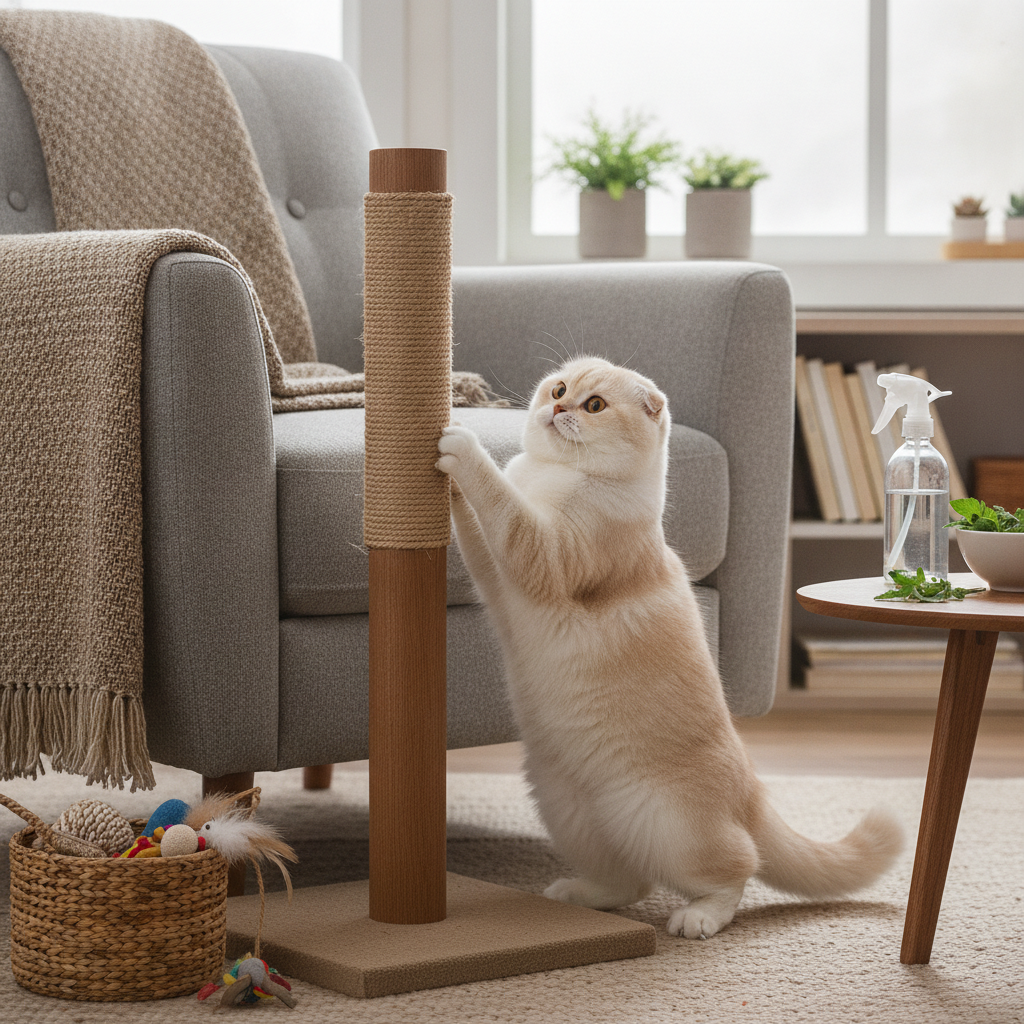
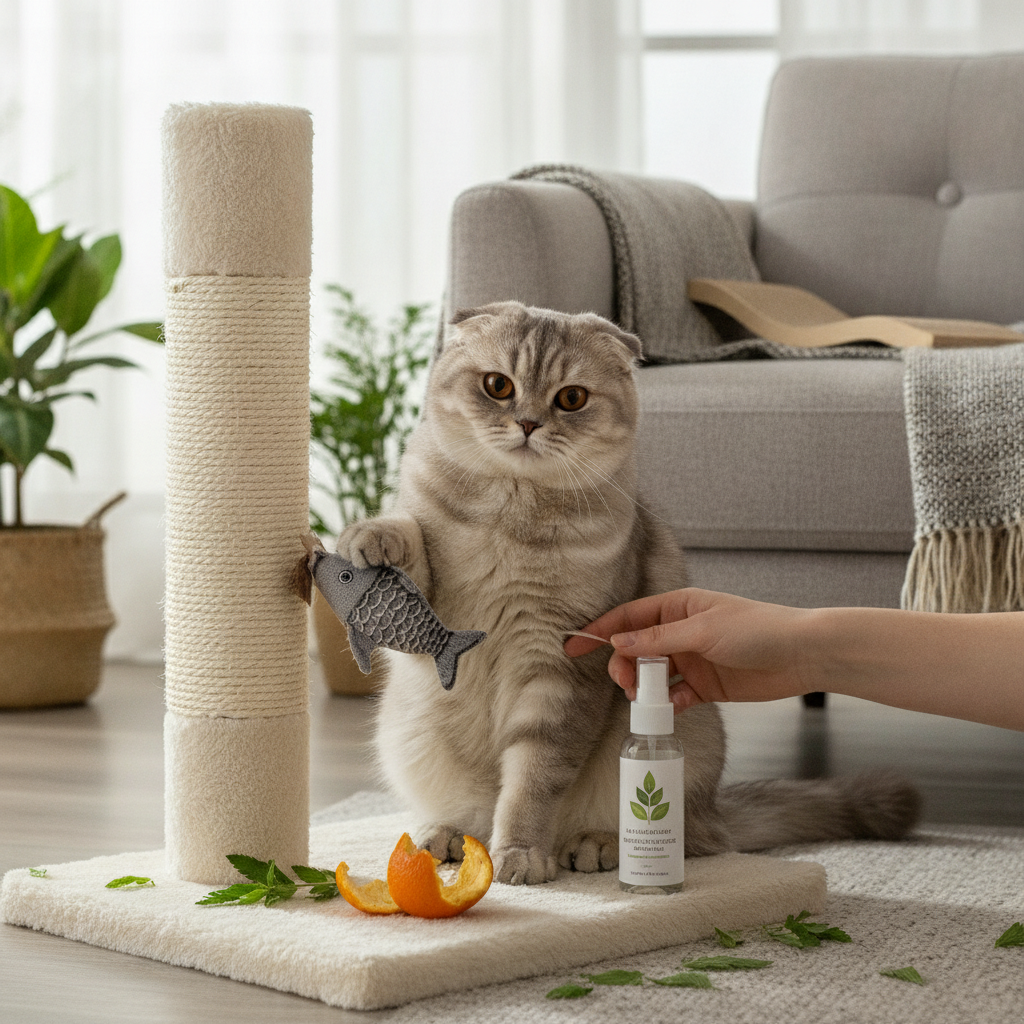
A simple and effective deterrent is double-sided sticky tape or specialized furniture guards designed for cats. Most cats dislike the sticky sensation on their paws and will quickly learn to avoid that surface. Apply these to the specific areas your cat has been scratching, such as the corners of the couch or the legs of a chair.
Some cats are also sensitive to certain scents. Citrus-based sprays, for example, can be a deterrent for many felines. Just be sure to test any spray on an inconspicuous area of your furniture first to ensure it doesn’t cause staining or damage.
Once your cat consistently uses their new scratching posts, you can begin to remove the deterrents gradually. This transition helps reinforce their new, positive scratching habits without overwhelming them.
Incorporate Environmental Enrichment
A bored or stressed cat is more likely to engage in unwanted behaviors, including excessive scratching. Providing a stimulating environment can significantly reduce these instances by burning off energy and providing mental engagement.
Schedule daily interactive play sessions with your cat using wand toys, laser pointers, or feather teasers. Aim for 10-15 minutes, two or three times a day, focusing on play that mimics hunting. This helps them burn off energy, satisfy their predatory instincts, and bond with you.
Introduce puzzle feeders that make your cat work for their food, stimulating their mind. Vertical spaces, like cat trees, wall-mounted shelves, or window perches, provide secure vantage points and opportunities for climbing and exploration. These additions can transform their environment, reducing the urge to scratch out of boredom.
To make new scratching posts even more enticing, rub a little catnip or silver vine on them. These natural attractants can significantly increase your cat’s interest and encourage them to investigate and use the post.
Maintain Your Cat’s Claws
Regular nail maintenance is a simple yet effective way to minimize any potential damage from scratching. Even if your cat scratches appropriately, keeping their claws trimmed will reduce the severity of marks on furniture or accidental scratches during play.
Aim to trim the sharp tips of your cat’s claws every few weeks. Use proper cat claw clippers, which are designed to cut cleanly and prevent splitting. If you’re unsure how to do it, ask your veterinarian or a professional groomer for a demonstration. They can show you how to identify the quick (the pink part of the nail that contains blood vessels and nerves) to avoid cutting it, which can be painful for your cat.
Handle your cat’s paws gently from an early age, if possible, to get them accustomed to the process. Make it a calm, positive experience with treats and praise, helping to keep stress levels low for both of you.
Frequently Asked Questions
Why does my cat ignore their new scratching post?
There are several reasons your cat might ignore a new scratching post. It could be the type of material – some cats prefer sisal, others cardboard or carpet. The post might also be too small, too short, or unstable; cats need a post they can stretch fully on and that won’t wobble. Another common reason is placement; if it’s not near where they already like to scratch, they might not find it. Try moving the post, rubbing it with catnip or silver vine, or offering a different style or material to see what appeals to them most.
Will declawing stop my cat from scratching furniture?
While declawing physically prevents a cat from scratching, it is an outdated and inhumane surgical procedure that involves amputating the last bone of each toe. It is not recommended by veterinarians and can lead to chronic pain, behavioral issues, and difficulty walking. Many countries have banned declawing, and it should always be considered a last resort, if at all. Focus instead on providing appropriate scratching outlets and training, which are far more humane and effective long-term solutions.
How can I get my cat to stop scratching the side of the couch?
To stop your cat from scratching the side of the couch, start by making that specific area unappealing. Apply double-sided tape, furniture guards, or even aluminum foil to the targeted spot. Simultaneously, place a highly appealing scratching post (vertical for couch sides) right next to that section of the couch. Ensure it’s sturdy and a material your cat enjoys. Encourage its use with catnip and praise. Once your cat consistently uses the post, you can gradually remove the deterrents from the couch.
By taking a patient, positive approach, you can successfully redirect your cat’s natural scratching instincts. Providing appealing alternatives, using temporary deterrents, enriching their environment, and maintaining their claws are all key steps to a harmonious home for both you and your feline companion.