
Cats often knead blankets as a familiar, comforting behavior carried over from kittenhood. Kittens press their paws while nursing; some adult cats repeat the movement on soft bedding or a person’s lap. The exact reason an individual adult cat does it is not certain, and kneading alone does not prove happiness, anxiety or pain.
Watch the whole situation: a cat settling comfortably for sleep is different from a cat that has suddenly started hiding, eating less or chewing fabric.
Table of Contents
Key Takeaways
- Kneading is the repeated pressing of the front paws, often called “making biscuits.”
- Its nursing function in kittens is established; adult explanations include comfort and familiar textures.
- You usually do not need to stop relaxed kneading.
- Protect your lap and bedding with suitable fabric and safe claw care.
- Sudden changes, illness signs or swallowed fabric need veterinary advice.
Why Blankets Bring Out the “Making Biscuits” Motion
Soft surfaces can prompt the paw movement learned during nursing. Cats Protection explains that the reason it persists in adults is still uncertain. A comforting association or an automatic response to texture are possible explanations, rather than proof that the cat is remembering a particular kittenhood experience.

Your cat may do it before curling up or while sitting close to you. The same preference for a familiar resting place may appear when a cat sleeps on its owner. Allow the cat to choose whether to stay or move away.
Comfort, Scent and Nesting: What Can We Actually Tell?
VCA describes paw scent glands as one possible part of kneading and notes that cats commonly do it around trusted companions. Preparing a resting place is another proposed explanation. Cats Protection calls the inherited grass-flattening explanation less well supported, so it should not be presented as a proven reason for every cat.
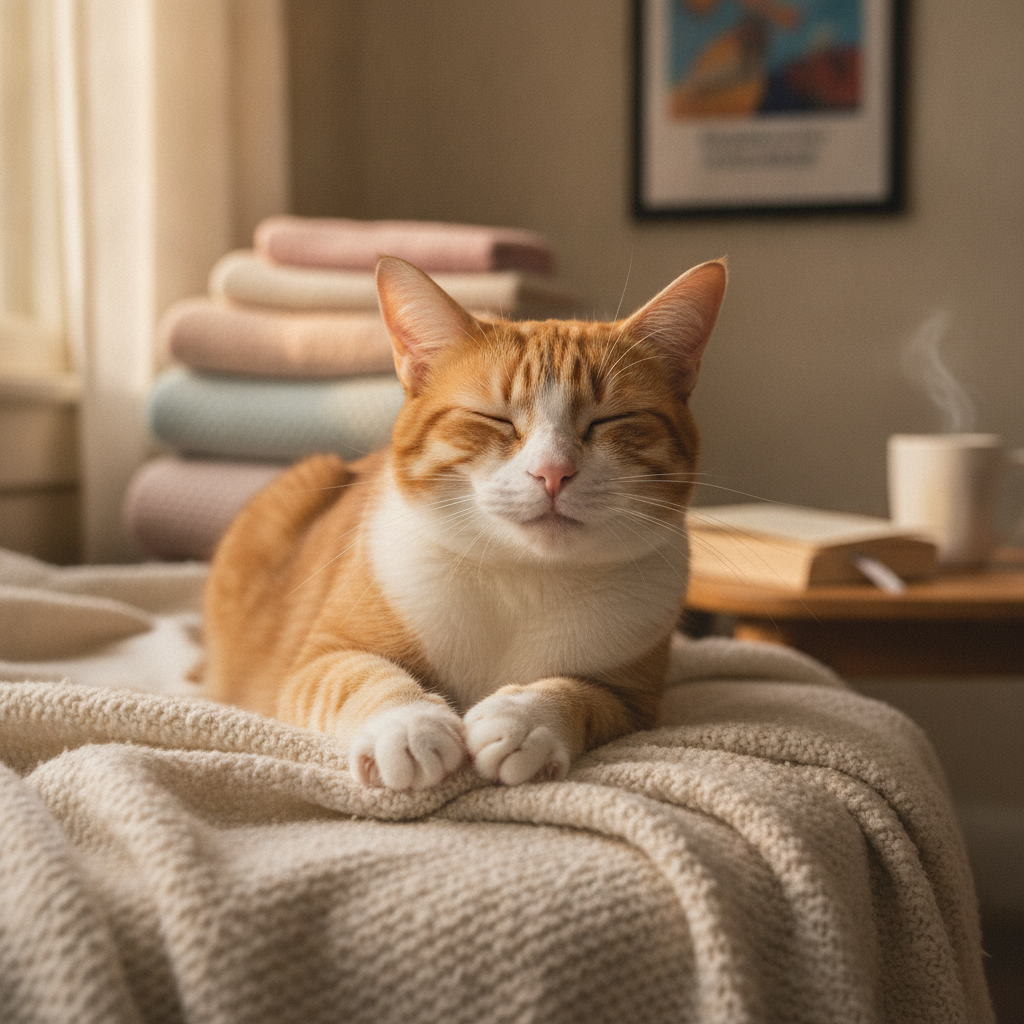
Use context instead of interpreting one movement as a complete emotional message. A familiar routine, a comfortable resting posture and otherwise usual behavior are more reassuring than a sudden change in a cat that seems unwell.
How to Protect Your Lap and Bedding
- Offer an appropriate surface. Put a thick, intact blanket on the usual resting spot or across your lap.
- Redirect gently. Encourage the cat toward that surface with a toy or a change of position; avoid punishment.
- Keep claw care comfortable. Our cat nail-trimming guide explains preparation and safe handling. Ask a veterinary professional for help if needed.
- Separate kneading from scratching. If furniture damage comes from scratching, provide suitable outlets using our scratching redirection guide.

Check the blanket for loose threads or damage. A surface that a cat chews or swallows is not a suitable unsupervised kneading blanket.
When a Change in Kneading Needs Attention
VCA notes that a cat that feels unwell may also purr and knead to soothe itself. A sudden increase, unusual hiding place or changed appetite deserves attention to the cat’s overall health; kneading itself cannot diagnose the cause.
Contact your veterinarian for persistent changes, signs of pain or new excessive drooling. Eating fabric or thread is a separate concern: VCA describes pica as ingestion of non-food material, which can cause serious problems. If you think your cat has swallowed material, seek veterinary advice promptly.
Common Questions
Is kneading blankets normal in an adult cat?
It can be a normal adult behavior. A longstanding, relaxed routine usually does not need interruption. Evaluate new or persistent changes alongside appetite, activity and other behavior.
Does kneading mean my cat was weaned too early?
Kneading alone cannot establish a cat’s early history. It occurs in kittens during nursing and persists in some adults; avoid inferring a specific cause from that observation alone.
Why does my cat purr or drool while kneading?
Purring can accompany relaxation, but it does not prove that a cat is free of discomfort. New or excessive drooling should not be dismissed as happiness; ask your veterinarian, especially if eating or behavior also changes.
What if my cat bites or sucks the blanket?
Distinguish paw pressing from chewing, sucking and swallowing. Remove damaged material and ask your veterinarian about repeated fabric chewing or ingestion. If the issue is bites directed at people, see our separate cat-biting guide.