To stop your dog from jumping on guests when they arrive, focus on teaching them a polite alternative behavior, like sitting or staying on a mat, using positive reinforcement. This method involves managing your dog’s environment to prevent jumping, practicing calmly with door triggers, and rewarding them generously for keeping all four paws on the floor. By consistently showing your dog what you do want them to do, rather than punishing unwanted behavior, you can transform chaotic greetings into calm, enjoyable encounters for everyone.
Stopping your dog from jumping on guests requires patience and consistency, but it’s a completely achievable goal for most pet owners. This guide will walk you through a step-by-step, positive reinforcement method to manage your dog’s excitement at the door and teach them proper dog greeting etiquette.
Table of Contents
Key Takeaways
- Understand the Cause: Dogs jump out of excitement and a desire for attention, not dominance.
- Manage the Environment: Use gates or leashes to prevent jumping while training.
- Teach a Replacement Behavior: Train a polite sit or ‘place’ command at the door.
- Practice Systematically: Desensitize to door triggers gradually, starting with no distractions.
- Consistency is Crucial: Ensure all household members and guests follow the rules.
Why Dogs Jump on Guests
Understanding why your dog jumps is the first step to changing the behavior. This isn’t usually about dominance or trying to be “bad”; it’s a natural, albeit inconvenient, part of being a dog.
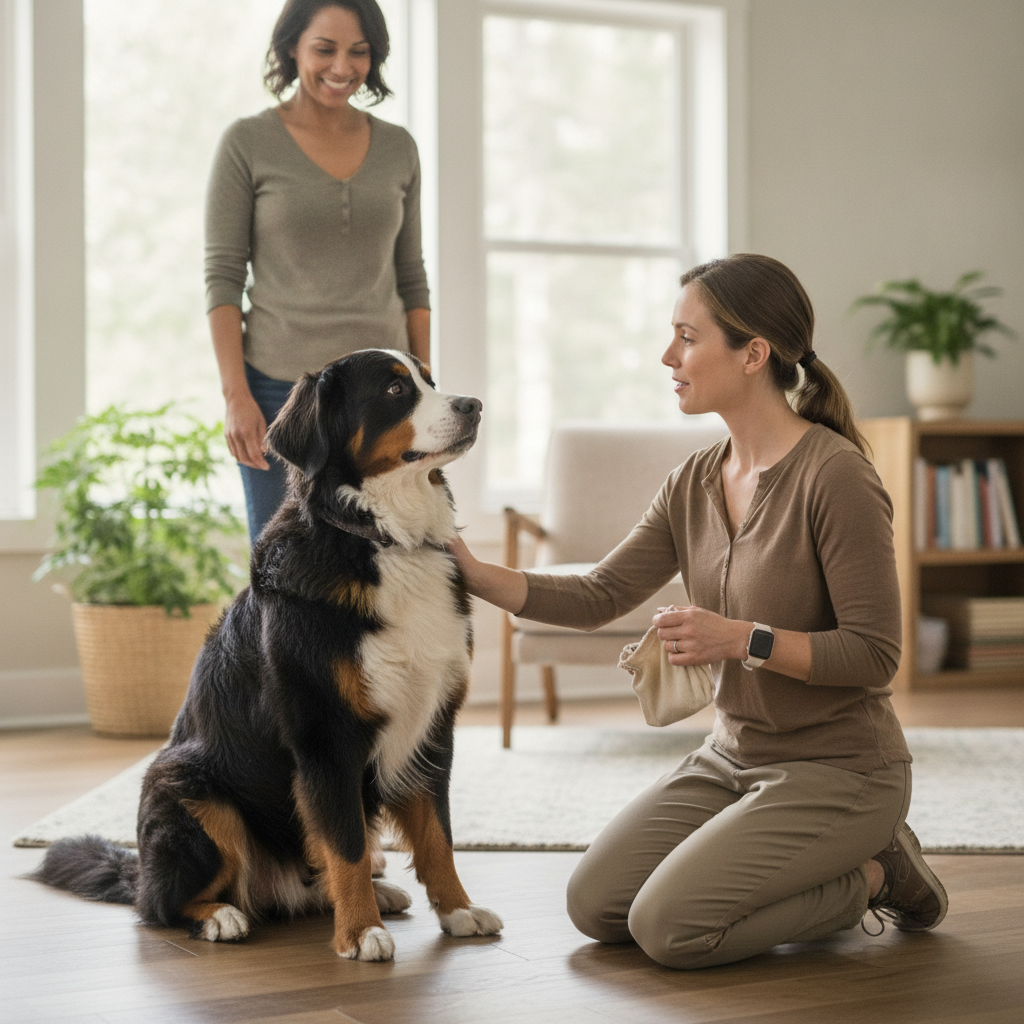
Jumping often begins as a natural greeting behavior learned in puppyhood. Puppies might jump up to lick their mother’s face or get attention from larger dogs. When they greet humans, they’re often trying to get closer to our faces to say hello, just as they would with another dog.
Humans, often unknowingly, reinforce this behavior. Pushing a dog away, shouting “no,” or even petting them for a moment can be perceived as attention, which is a reward for your dog. For an excited dog, any attention is good attention, strengthening the jumping habit.
The arrival of guests brings peak excitement. The sound of the doorbell, footsteps, and the opening door trigger high arousal, making it difficult for your dog to control their impulses. They are simply overwhelmed with joy and anticipation.
Immediate Management: Controlling the Environment
While you’re working on training, the most crucial thing you can do is prevent your dog from practicing the unwanted behavior. Every time your dog jumps on a guest, the behavior is reinforced, making it harder to extinguish. Immediate management helps you prevent this.
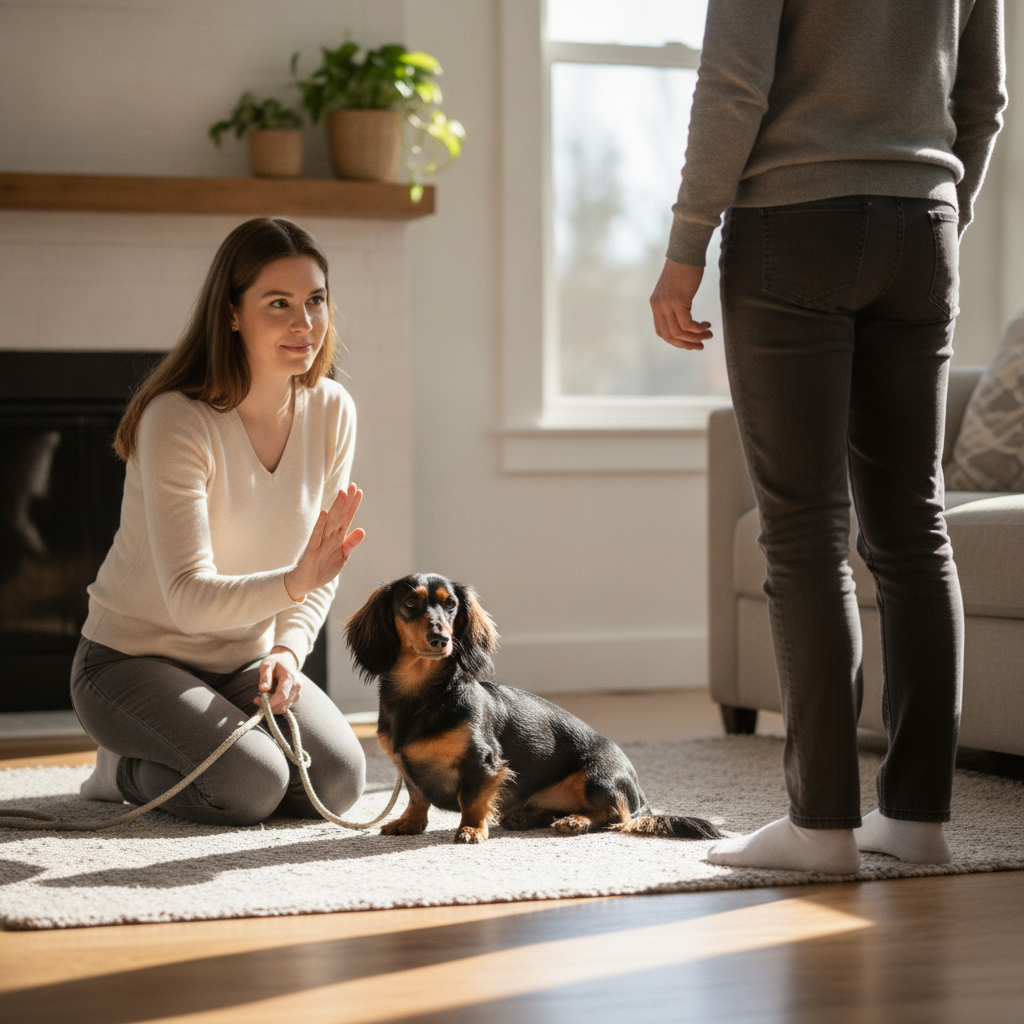
- Physical Barriers: Use baby gates, a leash, or a crate to physically prevent your dog from reaching the front door when guests arrive. This creates a safe zone where they can be calm without feeling the urge to jump.
- Pre-Arrival Leash-Up: If using a leash, have your dog on it before guests even knock. Hold the leash firmly but gently, keeping them by your side.
- Instruct Visitors: Politely ask your guests in advance to ignore your dog entirely until all four paws are on the floor. No eye contact, no talking, no petting. This removes the reward (attention) for jumping.
- Remove the Reward: If your dog does jump, immediately turn your back and walk away, effectively using body blocking. Re-engage only when all four paws are on the ground and they are calm.
Teaching an Incompatible Behavior: The Polite Sit
Instead of merely telling your dog what not to do, teach them what you do want them to do. An alternative behavior like sitting for attention makes jumping physically impossible and offers your dog a clear way to earn greetings.
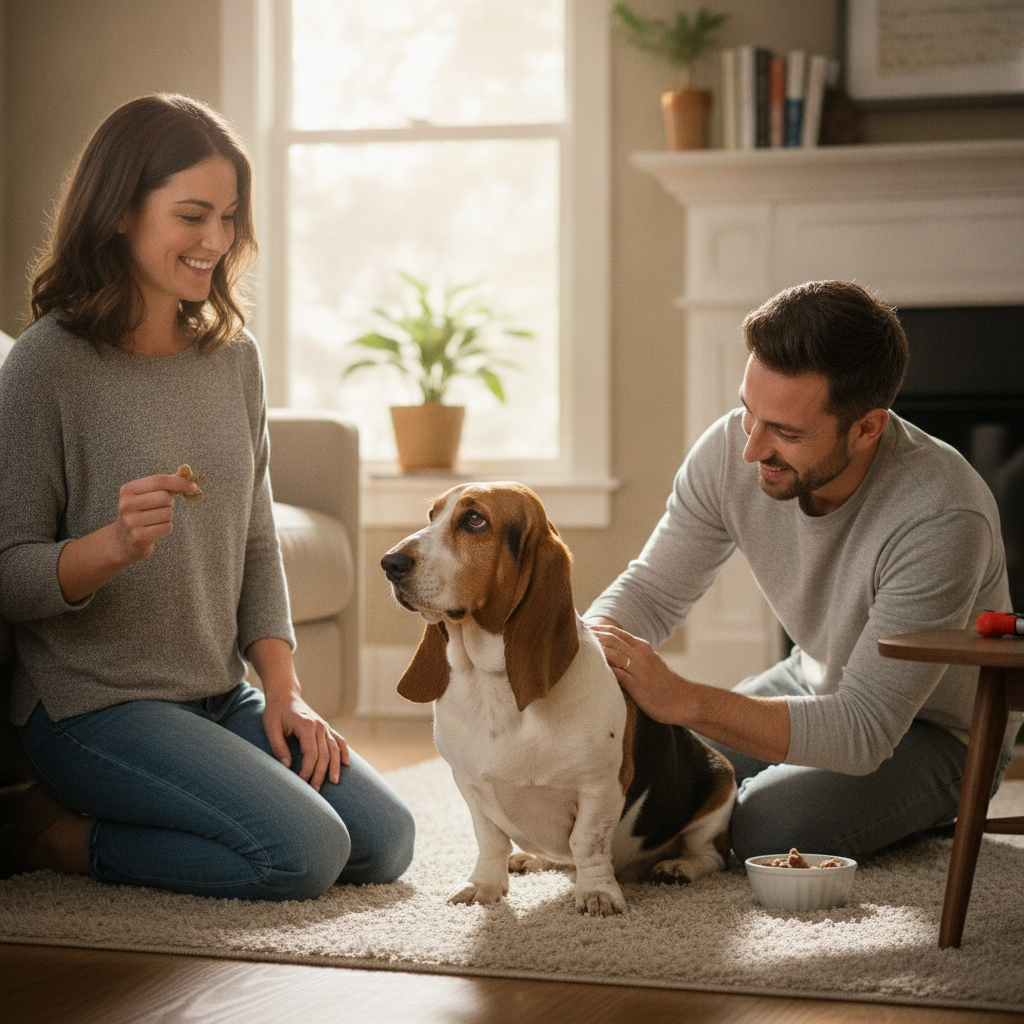
- Choose Your Behavior: The most common and effective alternative behavior is a sit. A ‘place’ command, where your dog goes to a designated mat or bed, is another excellent option, especially for very excitable dogs.
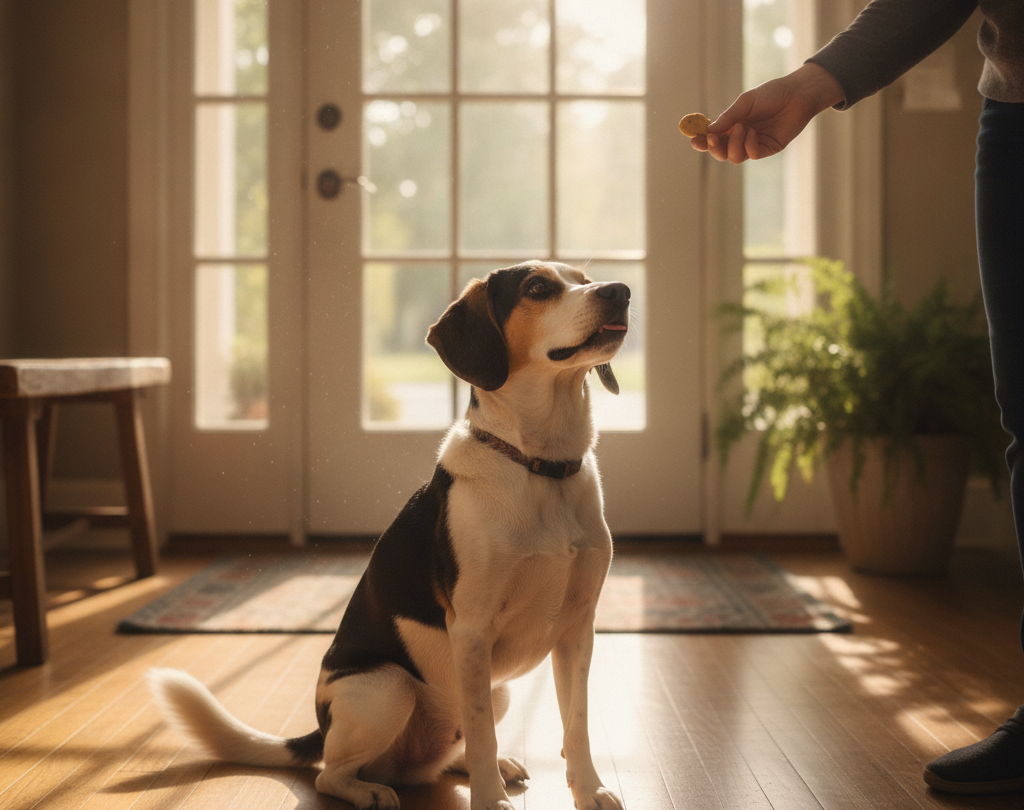
- Practice Without Distractions: Start by practicing the sit or place command in a quiet room with no distractions. Reward them generously with high-value treats and praise for holding the position. Gradually add minor distractions like a jingling set of keys, but not yet the door.
- Introduce Door Triggers Slowly: Once your dog is reliable with their chosen behavior, begin to introduce door-related triggers. Walk towards the door, jiggle the handle, or even lightly tap on the door. Ask for the sit or place command and reward them heavily for staying calm and keeping all four paws on the ground.
- Reward Calmness: The key is to reward your dog not just for sitting, but for the underlying calmness. If they sit but are still squirming or whining, wait for a moment of true stillness before giving the treat. A treat pouch can be helpful for quick access to rewards.
Step-by-Step Doorbell Desensitization
Doorbell desensitization helps reduce the emotional charge associated with guests arriving. By breaking down the greeting into smaller, manageable steps, you can help your dog practice polite behavior without becoming over-aroused.
- Lower the Charge: Have a family member or friend ring the doorbell or knock. Do not open the door yet. The moment your dog responds with barking or excitement, stop the ringing/knocking. Wait for a moment of quiet, then repeat. The goal is for the doorbell to become less exciting.
- Practice Calm Responses: Once your dog can hear the doorbell without immediately erupting, start asking for their polite sit or place command *before* the doorbell rings, or as soon as it rings. Reward them if they stay in position calmly.
- Open the Door Slowly: With your dog calm and in their sit/place, slowly reach for the doorknob. If they get up or become agitated, close the door or take a step back, reset, and try again. Only open the door a crack when your dog remains settled.
- Mock Greetings: Enlist a patient friend or family member to act as a guest. Have them approach and knock. Your dog should be on a leash or behind a gate, practicing their sit/place. Open the door only when your dog is calm.
- The “Guest” Enters: When the “guest” enters, they should completely ignore your dog. Once your dog has been sitting calmly with all four paws on the floor for 5-10 seconds, the guest can then offer a calm, quiet greeting and a gentle pet. If your dog jumps, the guest immediately turns their back.
- Short, Frequent Sessions: Keep these practice sessions short (5-10 minutes) and positive. End on a successful note to build your dog’s confidence.
Troubleshooting Common Setbacks
Even with the best intentions, training can sometimes hit a snag. Here are common reasons why training might stall and how to adjust your approach.
- Inconsistency from Visitors: This is often the biggest hurdle. If some guests reward jumping, even accidentally, it undoes much of your hard work. It’s vital to communicate clear rules to everyone who enters your home. Consider putting a polite sign on your door as a reminder.
- Over-Aroused Dogs: If your dog is consistently too excited to focus, they may need more physical exercise or mental enrichment before company arrives. A brisk walk or a puzzle toy can help drain excess energy and make them more receptive to training.
- Jumping with Fear or Aggression: If your dog’s jumping is accompanied by intense fear, growling, lunging, or snapping, this goes beyond simple over-excitement. These behaviors indicate a deeper underlying issue that requires professional intervention. Consult a certified professional dog trainer or a veterinary behaviorist immediately. They can help diagnose the cause and develop a safe, effective behavior modification plan.
Frequently Asked Questions
Why does my dog only jump on certain guests?
Dogs often jump on certain guests more than others because those individuals might inadvertently provide more reinforcement. Perhaps these guests are more excitable themselves, make direct eye contact, or offer attention (even negative attention like pushing away) more readily than others. It could also be that some guests smell particularly interesting, or your dog has had a more exciting previous interaction with them.
Should I knee my dog in the chest when they jump?
Absolutely not. Physical punishment, like kneeing your dog in the chest, is not only harmful and inhumane, but it can also severely damage the trust between you and your dog. It teaches fear and can lead to defensive aggression, making the problem worse rather than better. Positive reinforcement dog training methods, which focus on teaching alternative behaviors, are far more effective and ethical.
How long does it take to stop a dog from jumping on people?
The time it takes to stop a dog from jumping varies greatly depending on your dog’s individual temperament, age, how long the behavior has been practiced, and the consistency of your training. Some dogs might show improvement within a few weeks, while others might take several months of consistent practice. It’s often an ongoing process, especially if your dog is very excitable, but with patience and dedication, you will see progress.
Stopping your dog from jumping on guests is a journey that requires patience, consistency, and a commitment to positive reinforcement. By understanding your dog’s motivations and providing clear alternatives, you’re not just correcting a behavior; you’re strengthening your bond and teaching them valuable life skills for polite greetings. Keep practicing, stay consistent, and celebrate every small step toward a calmer, more enjoyable welcome at your door.