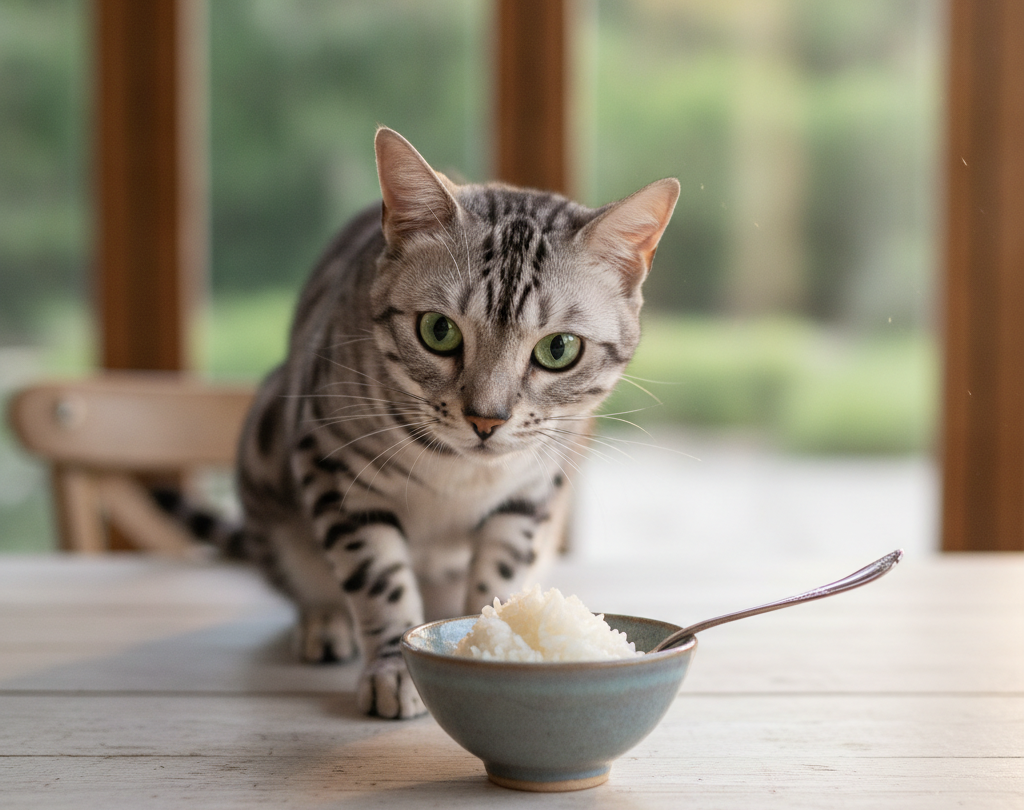
You might occasionally wonder if it’s safe to share a spoonful of rice with your feline friend, especially when preparing a meal for yourself. The good news is that plain, cooked rice is generally considered non-toxic for cats. However, it’s crucial to understand that while a small amount won’t harm them, rice offers very little nutritional value for an obligate carnivore like a cat. It should never be a staple in their diet, but it can play a specific, temporary role under veterinary guidance.
If you are reviewing your cat’s diet, also see whether chicken is safe for cats and learn why cats meow so much.
Table of Contents
Key Takeaways
- Plain, cooked rice is non-toxic for cats in small amounts.
- Cats are obligate carnivores and need a meat-based diet.
- Rice provides minimal nutritional benefits for felines.
- Veterinarians sometimes recommend plain white rice as part of a temporary bland diet for mild digestive upset.
- Always serve rice plain, without salt, butter, or seasonings, which can be harmful or toxic.
- Consult your vet before introducing new foods, especially if your cat is unwell.
Can Cats Eat Rice?
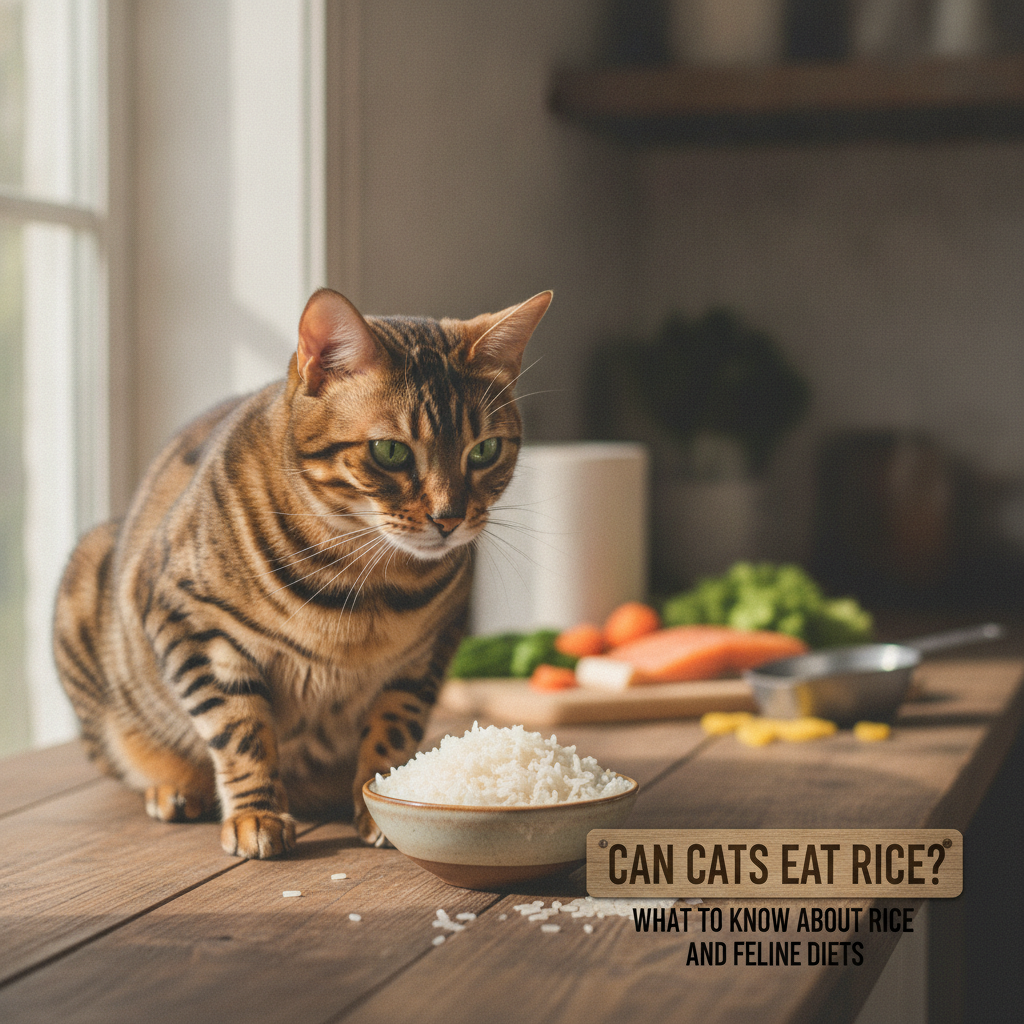
Yes, cats can eat rice, but with significant caveats. As obligate carnivores, cats are built to thrive on a diet rich in animal protein and fat, deriving most of their essential nutrients directly from meat. Their digestive systems are not designed to process large amounts of carbohydrates like rice efficiently. Therefore, while plain, cooked rice is generally non-toxic and safe for cats to eat in very small quantities, it doesn’t contribute meaningfully to their long-term nutritional needs. Think of it more as an occasional, unnecessary treat or a temporary dietary aid rather than a regular food item.
When Veterinarians Recommend Rice: The Bland Diet Context
Despite its lack of nutritional punch for cats, there’s a specific situation where your veterinarian might suggest plain rice: as part of a bland diet for a cat experiencing mild gastrointestinal upset. If your cat has a sensitive stomach, or is recovering from a minor bout of vomiting or diarrhea, a vet might recommend a temporary diet of boiled, unseasoned chicken mixed with plain white rice. The rice in this context acts as a binding agent, helping to firm up stools and providing a gentle source of energy that is easy on a temporarily irritated digestive system. It’s important to remember this is a short-term solution, and you should always consult your veterinarian before introducing any new foods to a cat, especially if they are unwell.
White Rice vs. Brown Rice for Cats
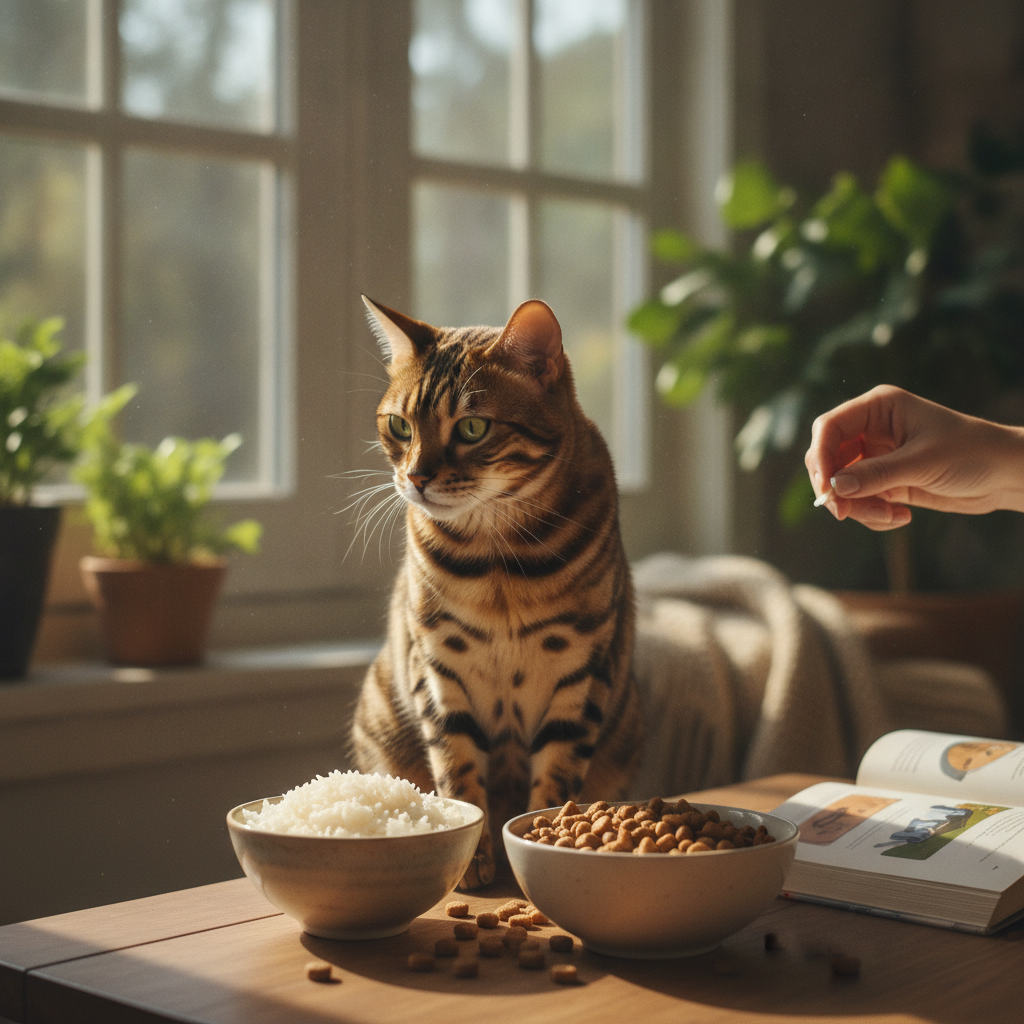
When considering rice for your cat, the type matters, particularly in the context of a bland diet.
White Rice is Often Preferred for Digestive Issues
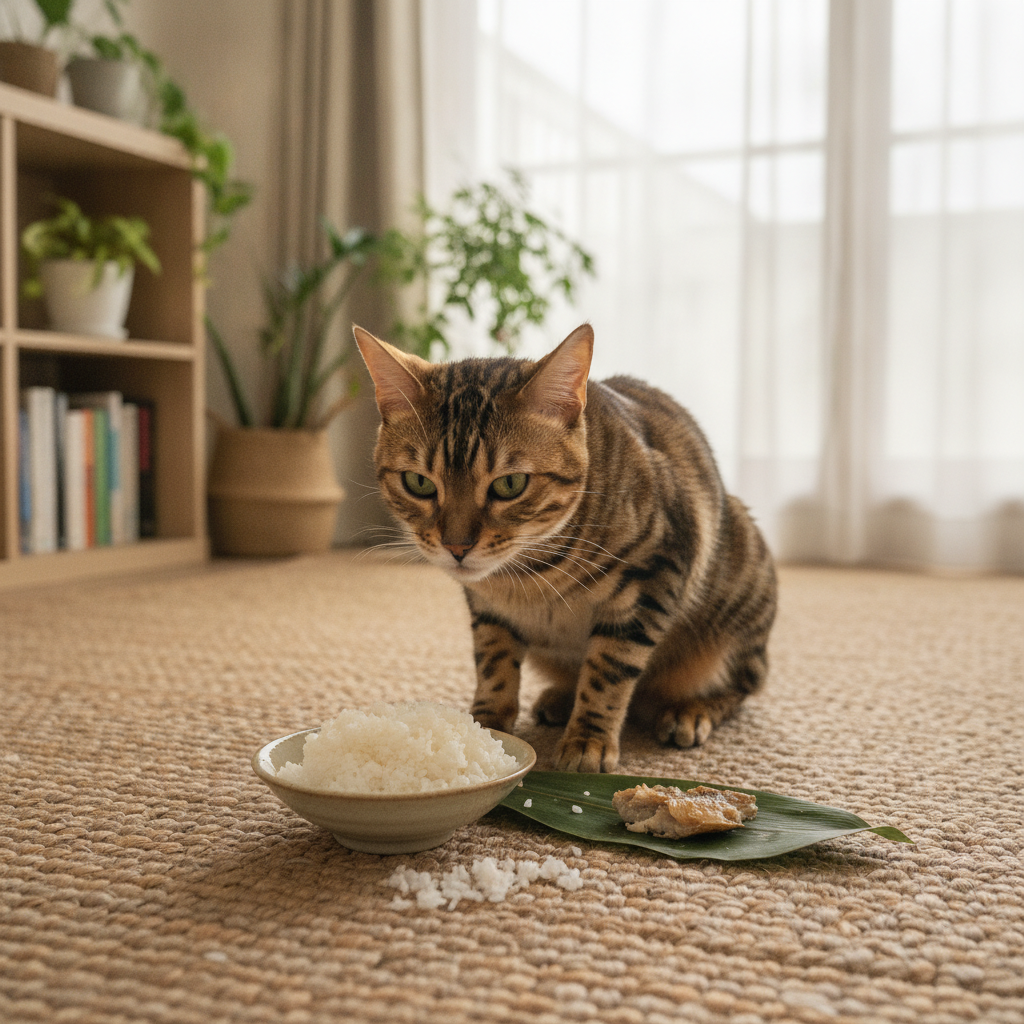
White rice has had its outer husk, bran, and germ removed, making it softer and easier to digest. This is why it’s typically the choice for temporary bland diets when a cat needs something gentle on their stomach. Its lower fiber content can be less irritating to an already upset digestive tract.
Brown Rice Can Be Harder to Digest
Brown rice, on the other hand, retains its bran and germ, which means it’s higher in fiber and has a tougher texture. While fiber can be beneficial in some contexts, for a cat with a sensitive or upset stomach, the extra fiber and harder-to-break-down components of brown rice can actually cause more digestive discomfort. Neither white nor brown rice should ever replace a high-quality, balanced, meat-based commercial cat food designed to meet all their nutritional requirements.
Checklist: Safe Preparation Methods for Cats
If you decide to offer your cat a tiny amount of rice, or if your vet has recommended it as part of a bland diet, proper preparation is essential to ensure it’s safe.
- Cook Thoroughly: Always cook the rice completely in plain water until it’s soft and tender. Raw rice is extremely difficult for cats to digest and can cause stomach upset.
- No Seasonings: This is perhaps the most critical rule. Never add salt, butter, oil, garlic, onions, chives, or any other spices or seasonings. Many common human food additives, especially garlic and onions, are toxic to cats and can lead to serious health issues.
- Serve Plain: The rice should be served entirely plain. No sauces, gravies, or anything else added.
- Small Quantity: Offer only a very small amount, perhaps a teaspoon at most, as an occasional treat. For bland diets, follow your veterinarian’s specific portion recommendations.
- Room Temperature: Ensure the rice has cooled down to room temperature before offering it to your cat to prevent burns.
Potential Risks and When to Call the Vet
While plain, cooked rice is non-toxic, there are still potential risks to be aware of, especially if given in large quantities or improperly.
- Digestive Discomfort: Overfeeding grains can lead to digestive upset, including bloating, gas, vomiting, or diarrhea, even if the rice itself is not toxic. Cats’ systems are not built for a high-carbohydrate load.
- Nutritional Imbalances: Regularly feeding rice or other human foods can displace essential nutrients from your cat’s balanced commercial diet, leading to deficiencies over time.
- Allergies: Though uncommon, some cats can develop sensitivities or allergies to grains, including rice.
When to Contact a Veterinarian
It’s important to monitor your cat closely after introducing any new food. Contact your veterinarian promptly if you observe any of the following:
- Persistent vomiting or diarrhea that doesn’t improve within 24 hours.
- Lethargy or weakness.
- Loss of appetite or refusal to eat their regular food.
- Abdominal pain or discomfort.
- Any unusual or severe symptoms.
Always err on the side of caution. If your cat’s digestive symptoms are severe, worsening, or unusual, or if they do not improve within 24 to 48 hours, seek professional veterinary attention immediately. Self-treating can delay critical medical care.
Frequently Asked Questions
Can cats eat raw rice?
No, cats should never eat raw rice. Raw rice is very hard for cats to digest and can contain lectins, which are proteins that can be harmful if consumed in large quantities. Always cook rice thoroughly until it’s soft before offering any to your cat.
Can cats with diabetes eat rice?
Cats with diabetes typically need a diet that is very low in carbohydrates to help manage their blood sugar levels. Rice, even plain white rice, is a carbohydrate and can cause spikes in blood glucose. Therefore, it is generally not recommended for diabetic cats. Always consult your veterinarian for specific dietary recommendations for a diabetic cat.
How much rice can I give my cat?
If you’re offering rice as an occasional treat, it should be a very small amount—no more than a teaspoon. If your veterinarian has recommended rice as part of a bland diet, they will provide specific portion sizes and duration. Rice should never make up a significant portion of your cat’s diet.
Is instant rice okay for cats?
Yes, plain instant rice, cooked according to package directions, is generally okay for cats in the same small, temporary quantities as regular white rice. Just like regular rice, it must be cooked thoroughly and served completely plain, without any added seasonings, salt, or fats.
Ultimately, while plain, cooked rice isn’t harmful in tiny amounts, it’s not a necessary or beneficial part of a cat’s diet. For any digestive issues, or if you’re considering dietary changes for health reasons, your veterinarian is your best resource for tailored, safe advice for your beloved feline.