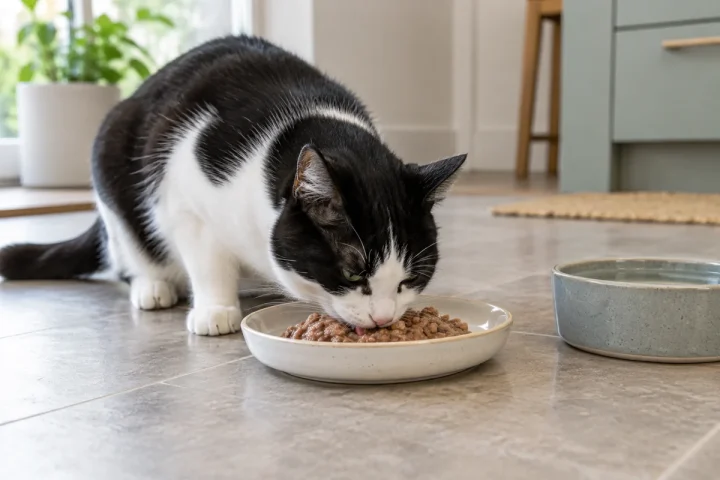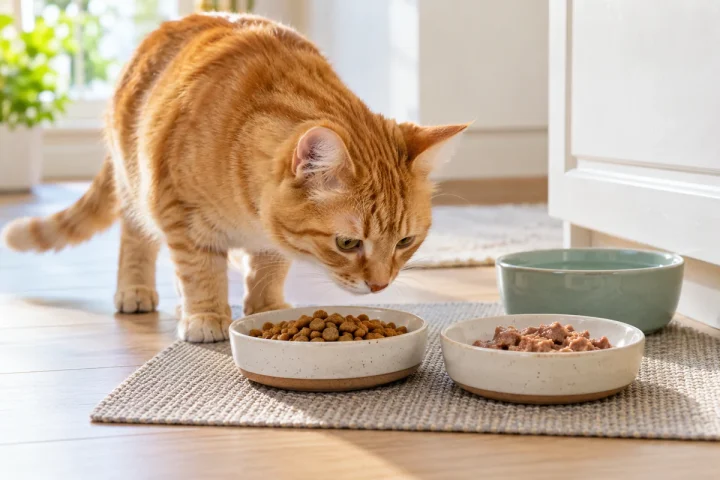
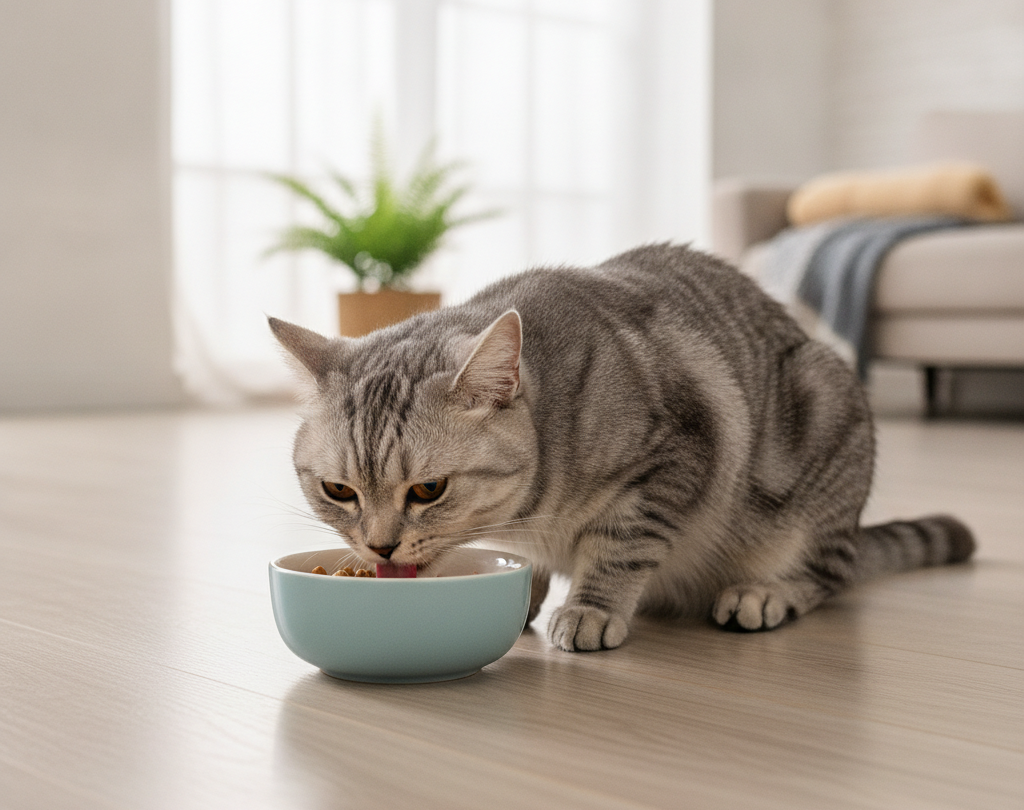
A suitable wet food for an indoor cat is complete and balanced for its life stage, accepted reliably, and fed in portions that match its individual needs. Wet food contributes water, but it does not automatically prevent urinary problems or produce weight loss. Compare the food’s calories and nutritional adequacy before relying on an “indoor” or “light” label.
For older cats, see our senior-cat nutrition guide. Treats and foods such as tuna should not displace the main complete diet.
Table of Contents
Key Takeaways
- Choose complete nutrition for the cat’s species and life stage.
- Wet food adds dietary water; keep drinking water available too.
- Compare calories per can, pouch or gram and measure the actual portion.
- Introduce a new food gradually without allowing food refusal.
- Urinary symptoms or unexplained weight change need veterinary assessment.
How Wet Food Supports Hydration
Cornell describes canned food as a useful source of dietary water. This can help cats that drink little, but the amount eaten and the cat’s health also matter. A cat that eats only part of the serving has received only part of its planned food and moisture.
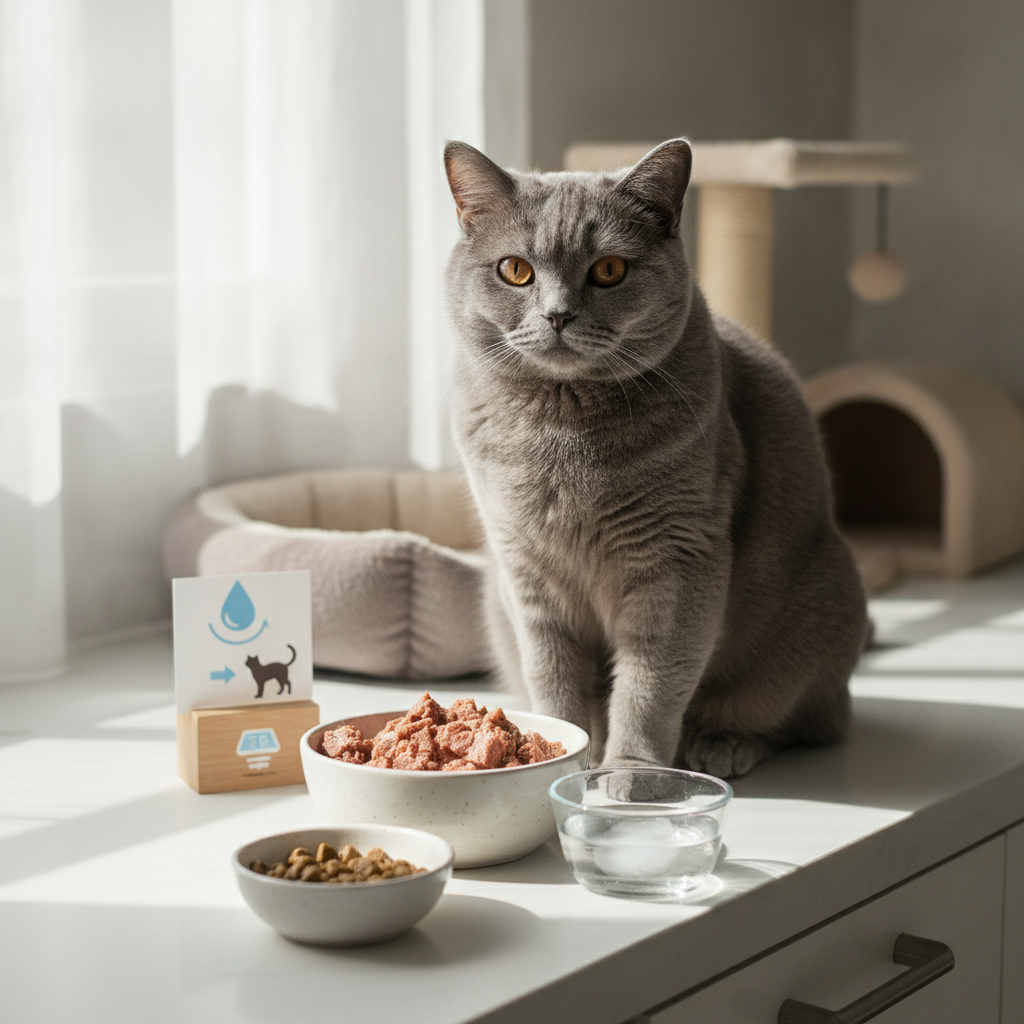
Provide fresh water in accessible places even when every meal is wet food. Discuss a sustained increase or decrease in drinking with your veterinarian rather than assuming the food format explains it.
Wet Food and Weight: Check Calories Before Portions
Moisture changes energy density, so equal spoonfuls of wet and dry food are not interchangeable. A larger-looking wet portion may contain fewer calories, but calorie content varies between recipes. Wet food can still supply more energy than a particular cat needs.
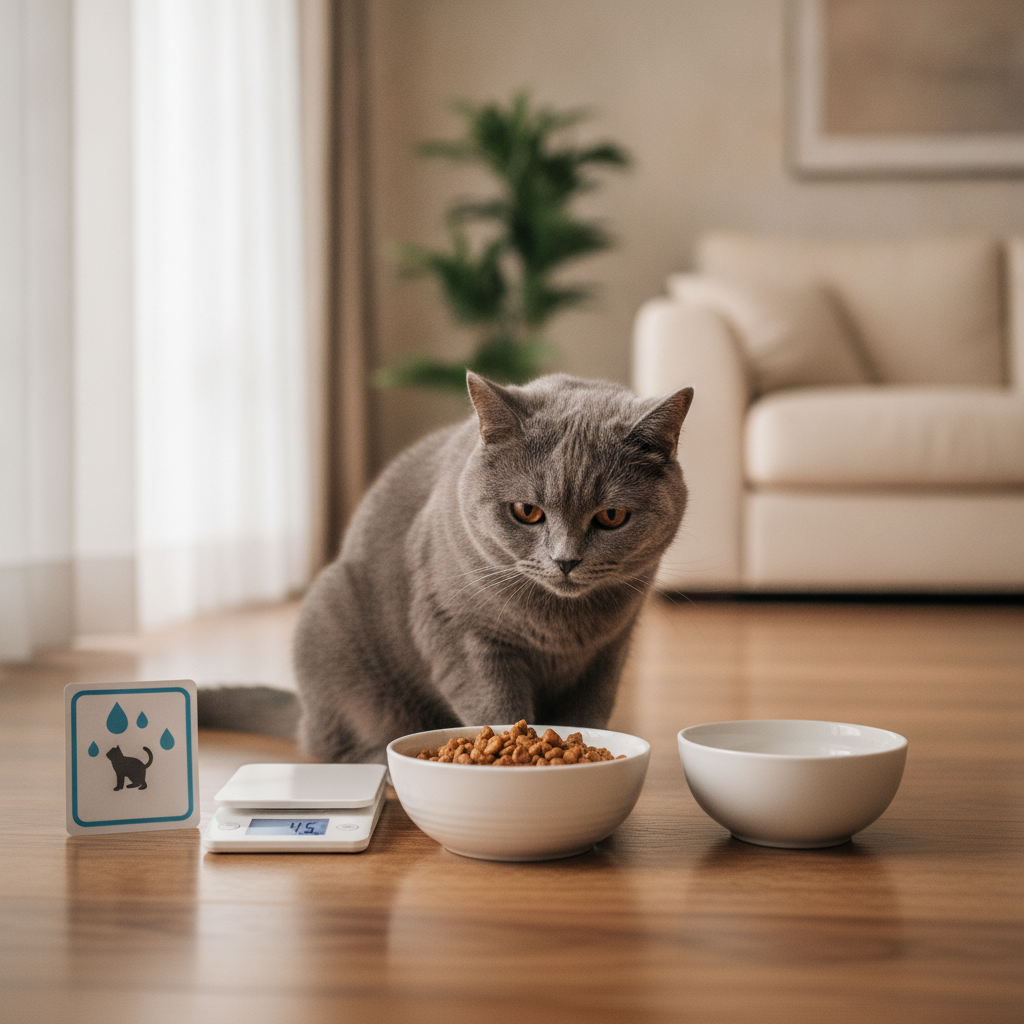
Ask your veterinary team about an appropriate daily allowance and body-condition target, particularly before weight loss. Use the label’s calorie statement to measure meals, account for treats and any dry food, and record what is actually eaten. Do not impose a sharp reduction because a cat is overweight. Unplanned weight loss needs assessment.
What to Check on a Wet Cat Food Label
- Nutritional adequacy: look for a complete diet suitable for the cat’s life stage. A complementary food or topper is not a replacement.
- Energy information: find kcal per can, pouch or gram and note the package size.
- Manufacturer information: look for accessible nutritional expertise, quality-control information and a way to ask questions.
- Medical suitability: confirm the diet with your veterinarian if your cat has a prescribed feeding plan.
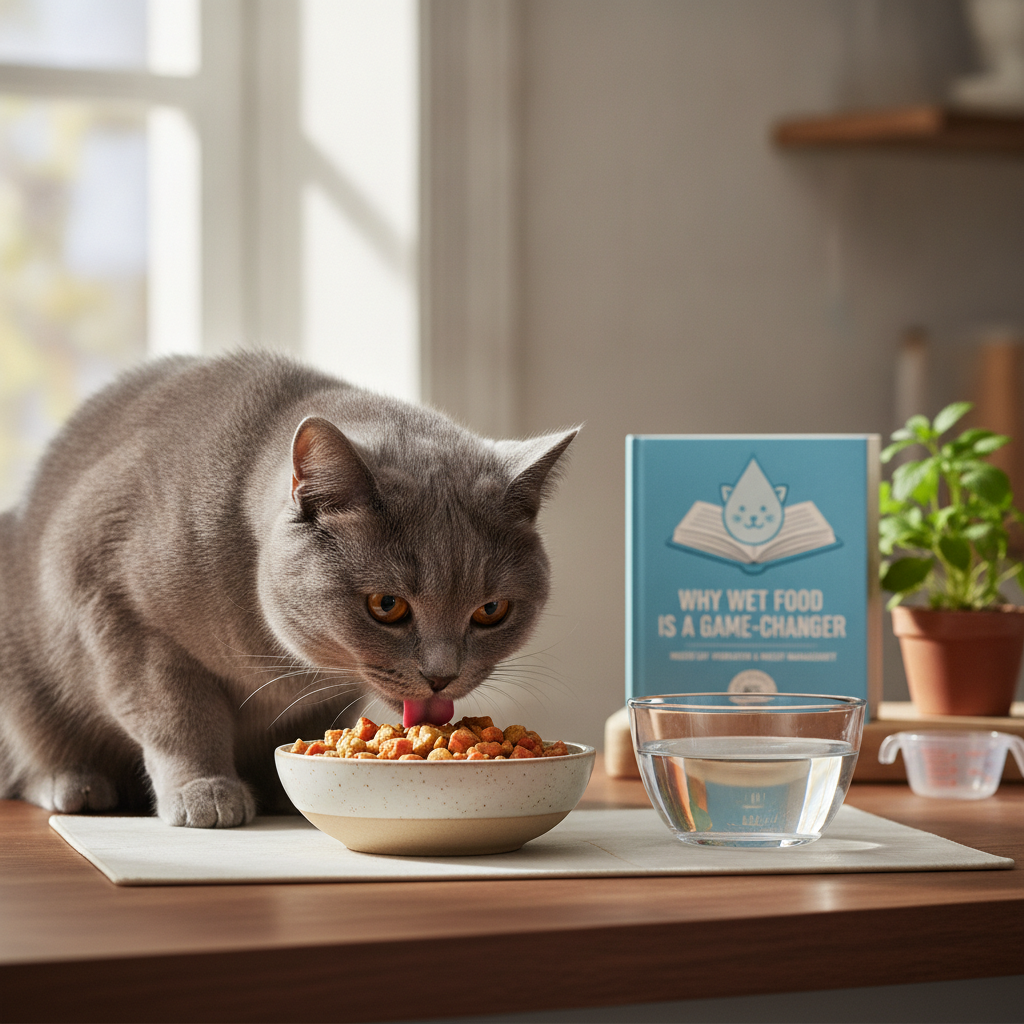
WSAVA explains that ingredient names alone cannot establish a food’s nutritional quality or digestibility. A named meat as the first ingredient does not prove that a formula is better, and the term “by-products” alone does not establish poor quality. Compare the finished diet and the manufacturer’s evidence.
Moisture also makes the printed protein percentages of wet and dry diets unsuitable for a simple side-by-side comparison. Ask the manufacturer or your veterinary team for a comparison on an equivalent basis.
Introduce Wet Meals and Store Them Safely
First offer a small amount beside the familiar food. Once accepted, make the change gradually and protect total intake. Our dry-to-wet food transition guide explains the stages and calorie-based portions.
Refrigerate the unused can or pouch portion promptly, use clean bowls, and follow the exact product’s serving and storage instructions. Manufacturer room-temperature limits differ. See how long wet cat food can sit out for the distinction between unused food and served leftovers.
When to Contact Your Veterinarian
Wet food is not a home treatment for urinary disease. Straining, repeated attempts to urinate or passing little or no urine require urgent veterinary attention; a blocked cat needs emergency care. Do not wait for a diet change to work.
Also seek advice for appetite loss, unexpected weight change, repeated vomiting or a cat that seems unwell. A prescribed urinary or kidney diet should not be replaced with an ordinary wet food without veterinary guidance.
Common Questions
Can an indoor cat eat only wet food?
Yes, if the main diet provides complete nutrition for that cat’s life stage and medical needs. A combination of suitable wet and dry food can also work when the total portion is planned.
Is every wet cat food suitable for weight loss?
No. The diet, calories, nutritional adequacy and monitoring plan matter. A wet texture or a lower calorie figure per can alone does not establish a safe weight-loss plan.
Does wet food prevent urinary problems?
No guarantee applies. Dietary water can support fluid intake, but urinary signs have several causes. Use the veterinary diagnosis and prescribed plan rather than substituting food format for treatment.
How long can I leave a wet meal in the bowl?
Follow that product’s instructions and clear uneaten food promptly. Do not borrow another brand’s longer limit. Keep the covered unused portion refrigerated; the detailed storage guide linked above explains the differences.