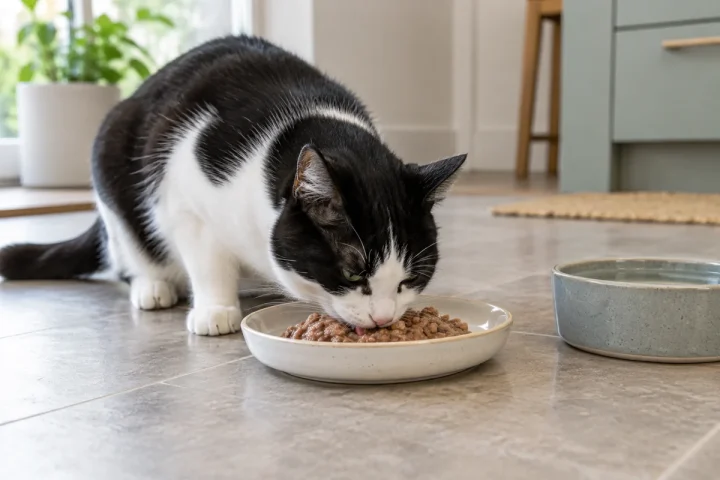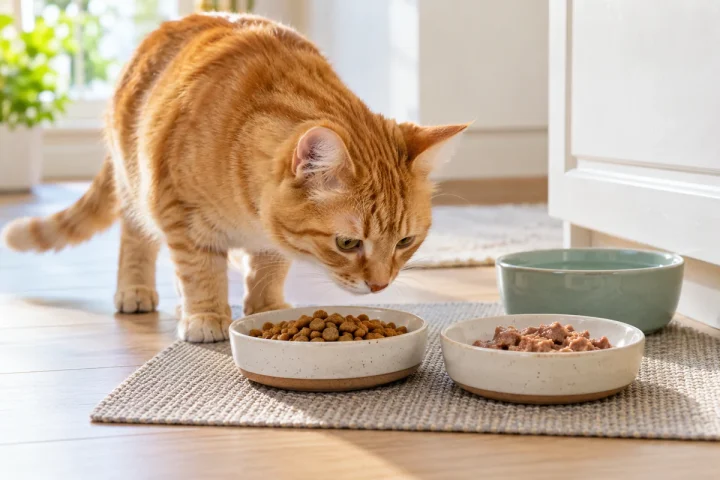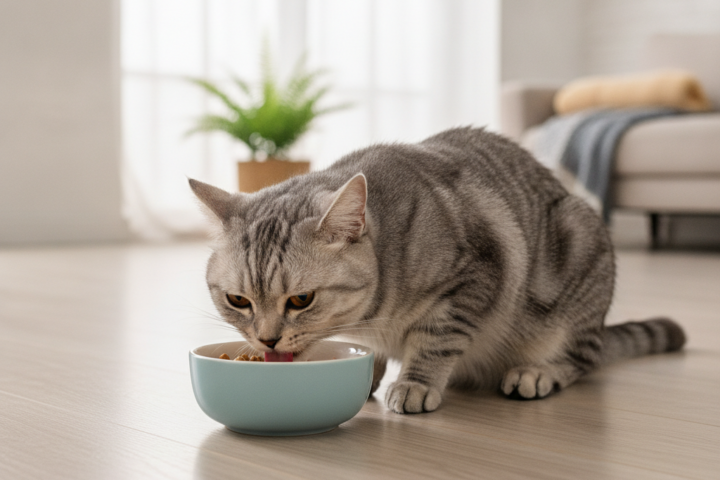
Yes, cats can absolutely eat plain, cooked chicken safely and it can be a wonderful, protein-rich treat or supplement to their regular diet. As obligate carnivores, cats thrive on animal protein, and properly prepared chicken offers essential nutrients they need to stay healthy and active. The key is in the preparation: it must be thoroughly cooked, completely plain, and free of any bones or seasonings that could be harmful. By following a few simple guidelines, you can safely share this tasty and nutritious food with your feline friend.
For more feline nutrition and behavior guidance, read whether cats can eat rice and learn why cats meow so much.
Table of Contents
Key Takeaways
- Plain, fully cooked chicken is safe and healthy for most cats in moderation.
- Never feed cats raw chicken due to bacterial risks like Salmonella.
- Avoid all seasonings, oils, salt, garlic, and onions, which are toxic to felines.
- Cooked bones must be removed completely as they splinter easily and pose a severe choking hazard.
Is Chicken Safe and Healthy for Cats?
For our feline friends, who are obligate carnivores, chicken is not just safe but also a highly beneficial source of animal-based protein. This means their digestive systems are specifically designed to process and thrive on meat, providing the essential amino acids they need to maintain strong muscles, healthy organs, and a robust immune system.
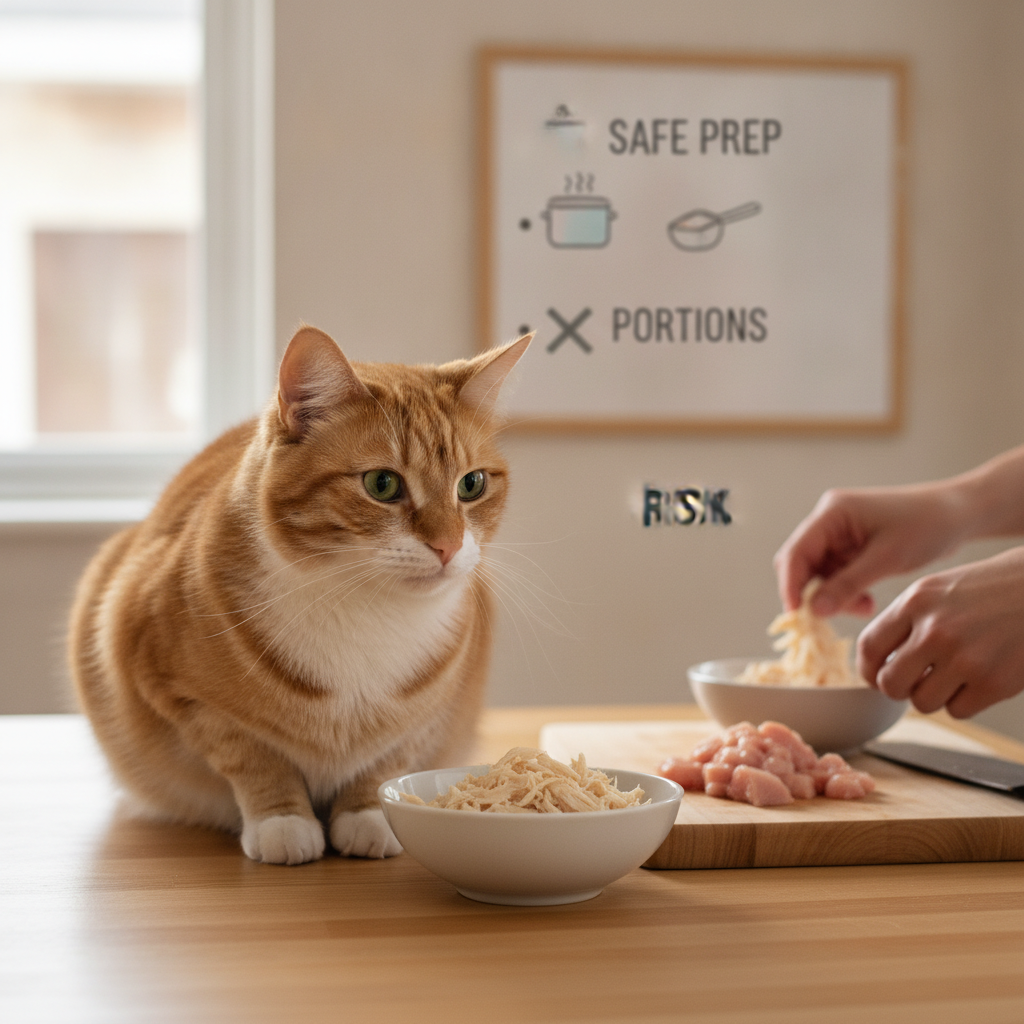
When you’re considering whether chicken is good for cats, remember it’s a lean protein that supports their overall well-being. It’s a fantastic way to offer them a natural source of nutrients. However, while chicken is nutritious, it should always be offered as a treat or supplement, not as a replacement for their balanced commercial cat food. Treats, including chicken, should ideally make up no more than ten percent of your cat’s daily caloric intake to prevent nutritional imbalances or weight gain.
How to Prepare Chicken Safely for Your Cat
The safety of feeding cats chicken largely depends on how it’s prepared. Proper cooking eliminates harmful bacteria and ensures the meat is digestible. The goal is always plain chicken for cats.
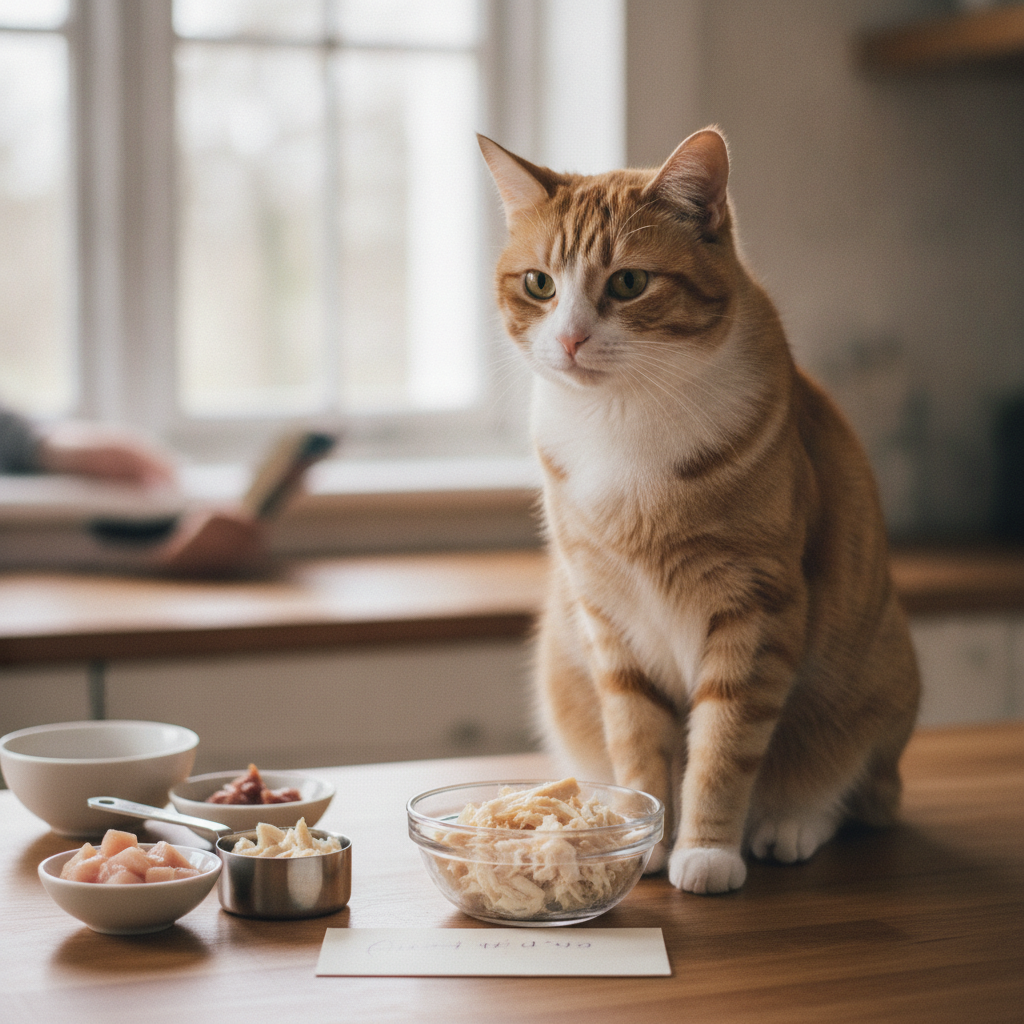
- Cooking Methods: Stick to simple methods like plain boiling, baking, or steaming. These methods cook the chicken thoroughly without needing added fats or oils, which can upset a cat’s stomach.
- Thoroughly Cooked: Ensure the meat is cooked all the way through, with no pink areas remaining. This eliminates potential pathogens like Salmonella.
- Plain and Unseasoned: Do not add any salt, pepper, herbs, spices, butter, oil, or marinades. Plain, unadulterated chicken is what your cat needs.
- Small Pieces: Once cooked and cooled, cut or shred the chicken into small, bite-sized pieces. This prevents choking hazards and makes it easier for your cat to eat.
Dangerous Ingredients and Parts to Avoid
While cooked chicken for cats can be a healthy treat, certain ingredients and parts of the chicken are extremely dangerous and must be avoided.
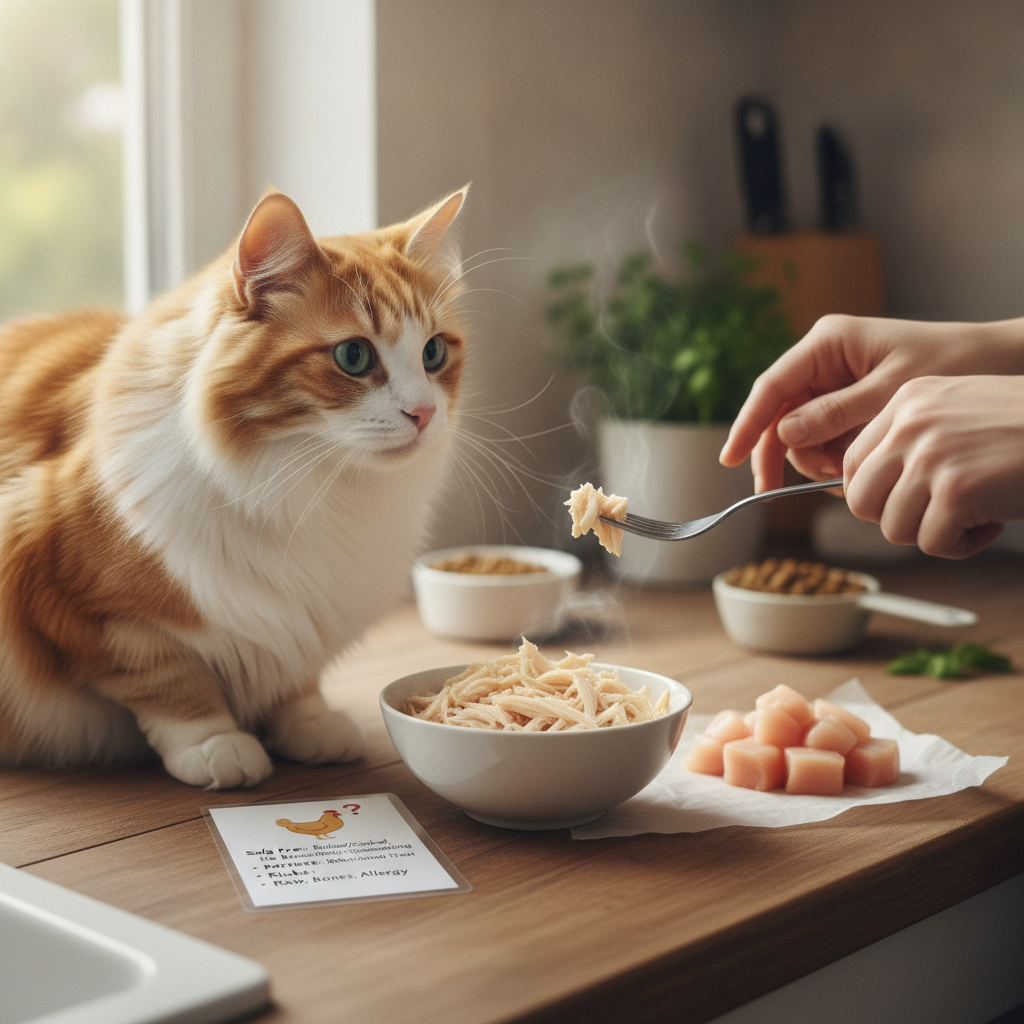
- Garlic and Onions: These, along with other members of the allium family (leeks, chives, shallots), are highly toxic to cats. Even small amounts can cause severe red blood cell damage, leading to anemia. Avoid any products containing onion powder or garlic powder.
- Seasonings and Fats: Common household seasonings like salt, pepper, and butter, as well as oils, can cause digestive upset, pancreatitis, or other long-term health issues for cats. Many spices are also irritating or toxic.
- Cooked Bones: This is a critical point. Cooked chicken bones become brittle and can splinter easily. If ingested, these sharp fragments can cause serious internal injuries, punctures, or obstructions in your cat’s digestive tract. Always remove all bones before offering chicken to your cat. Raw bones also pose a risk of choking or splintering.
Can Cats Eat Raw Chicken?
The question of whether cats can eat raw chicken is a common one, but for the average pet owner, the answer is a firm no. Raw chicken can harbor harmful bacteria such as E. coli and Salmonella, which can cause severe food poisoning in both cats and humans.
While some specialized commercial raw diets are formulated under strict safety controls to minimize bacterial contamination, feeding your cat raw meat from a standard grocery store poses significant risks. Pathogens can make your cat very ill, leading to symptoms like vomiting, diarrhea, and lethargy. Furthermore, handling raw meat can expose humans in the household to these same dangerous bacteria, making it a public health concern.
When to Contact a Veterinarian
Even with careful preparation, it’s wise to be aware of potential issues when introducing any new food to your cat. Your veterinarian is always your best resource for advice on your pet’s diet and health.
- Digestive Upset: If your cat shows common signs of digestive upset after trying chicken, such as vomiting, diarrhea, loss of appetite, or lethargy, contact your vet. These symptoms could indicate a food sensitivity or an upset stomach.
- Accidental Ingestion of Harmful Items: Seek immediate veterinary attention if you suspect your cat has consumed cooked bones, highly seasoned food, or anything containing garlic or onions. These situations are potentially life-threatening and require urgent professional care.
- Underlying Health Conditions: Always consult your veterinarian before introducing new foods, including chicken, if your cat has any underlying health conditions. Cats with kidney disease, pancreatitis, or food allergies may require specific dietary restrictions that a vet can best advise on.
Frequently Asked Questions
Can kittens eat plain cooked chicken?
Yes, very small amounts of plain, cooked, shredded chicken can be offered to kittens as a rare treat once they have been fully weaned and are eating solid food. It should be cut into extremely tiny pieces to prevent choking. Always consult your veterinarian before introducing any new foods to a kitten, especially given their delicate digestive systems.
How much chicken can I give my cat per day?
Chicken should be given as an occasional treat, not a meal replacement. Treats, including plain cooked chicken, should make up no more than 10% of your cat’s daily caloric intake. For an average adult cat, this typically means a piece or two the size of your thumbnail a few times a week, but not daily in large quantities.
Can cats with sensitive stomachs eat chicken?
Plain, boiled chicken is often recommended as a bland diet for cats with sensitive stomachs or during recovery from digestive upset, as it’s easily digestible. However, every cat is different. Start with a very small amount and monitor your cat closely for any adverse reactions. If your cat has a pre-existing condition causing a sensitive stomach, always discuss new foods with your veterinarian first.
Is store-bought rotisserie chicken safe for cats?
No, store-bought rotisserie chicken is generally not safe for cats. It’s typically heavily seasoned with salt, garlic, onion powder, and other spices that are toxic or harmful to felines. It also often contains high amounts of fat and sometimes hidden bones that can splinter. It’s always best to prepare plain chicken yourself to ensure it’s safe for your cat.
Offering plain, cooked chicken can be a delightful and healthy way to enrich your cat’s diet and strengthen your bond. Remember that careful preparation is key, and when in doubt about any new food or your cat’s health, your veterinarian is the best source of guidance.