

To get your cat to stop biting, match your response to the trigger: redirect playful pounces to a wand or kicker toy before they reach your hands; end petting at the first warning sign; and give a frightened cat space. If biting starts suddenly or seems linked to pain or touch, arrange a veterinary exam. Do not hit, shout at, or restrain an agitated cat.
Notice when the bite happens—during play, petting, handling, or after a startling event. That pattern helps you choose the right response. The practical steps below focus on preventing the next bite and rewarding gentle behavior.
Behavior makes more sense when you read the wider pattern. See why cats suddenly hide and why cats may meow more than usual.
Table of Contents
Cat Biting: What to Do First
- During play: Keep hands and feet out of games. Start a wand-toy session before your cat’s usual pounce time.
- During petting: Stop when the tail flicks, ears turn back, or the body stiffens; let your cat choose whether to return.
- Sudden or painful biting: Ask a veterinarian to check for illness or pain before treating it as a training problem.
- If skin is broken: Wash the wound promptly and follow the medical-care guidance below.
Why Cats Bite: Decoding the Triggers
Understanding why your cat bites is the first step toward changing the behavior. Cats communicate through a complex combination of body language and actions, and a bite is often a strong message.

One of the most common reasons, especially in younger cats, is play aggression. Kittens learn bite inhibition from their littermates and mother; if they were separated too early or didn’t learn those boundaries, they might not understand that human skin is fragile. They might see your wiggling fingers or toes as enticing prey, leading to playful pounces and bites.
Another frequent cause is petting-induced overstimulation. Some cats have a very specific “petting threshold.” They might enjoy affection for a short while, but once they’ve had enough, petting can become irritating or even painful. They might give subtle warnings that we often miss before resorting to a bite to make you stop.
Finally, fear or anxiety can also lead to biting. A cat who feels trapped, threatened, or is in pain may lash out defensively. This can be triggered by unfamiliar people, loud noises, sudden movements, or even being handled in a way they dislike.
Learning to recognize subtle feline body language changes is crucial. Look for signs like a twitching tail, flattened ears, dilated pupils, tense body, or a sudden stillness just before a bite. These are your cat’s way of saying they’re uncomfortable or about to react.
Immediate Steps to Take When Your Cat Bites
When your cat’s teeth make contact with your skin, your immediate reaction can either de-escalate the situation or make it worse. Remaining calm and responding appropriately is vital for both your safety and your cat’s training.
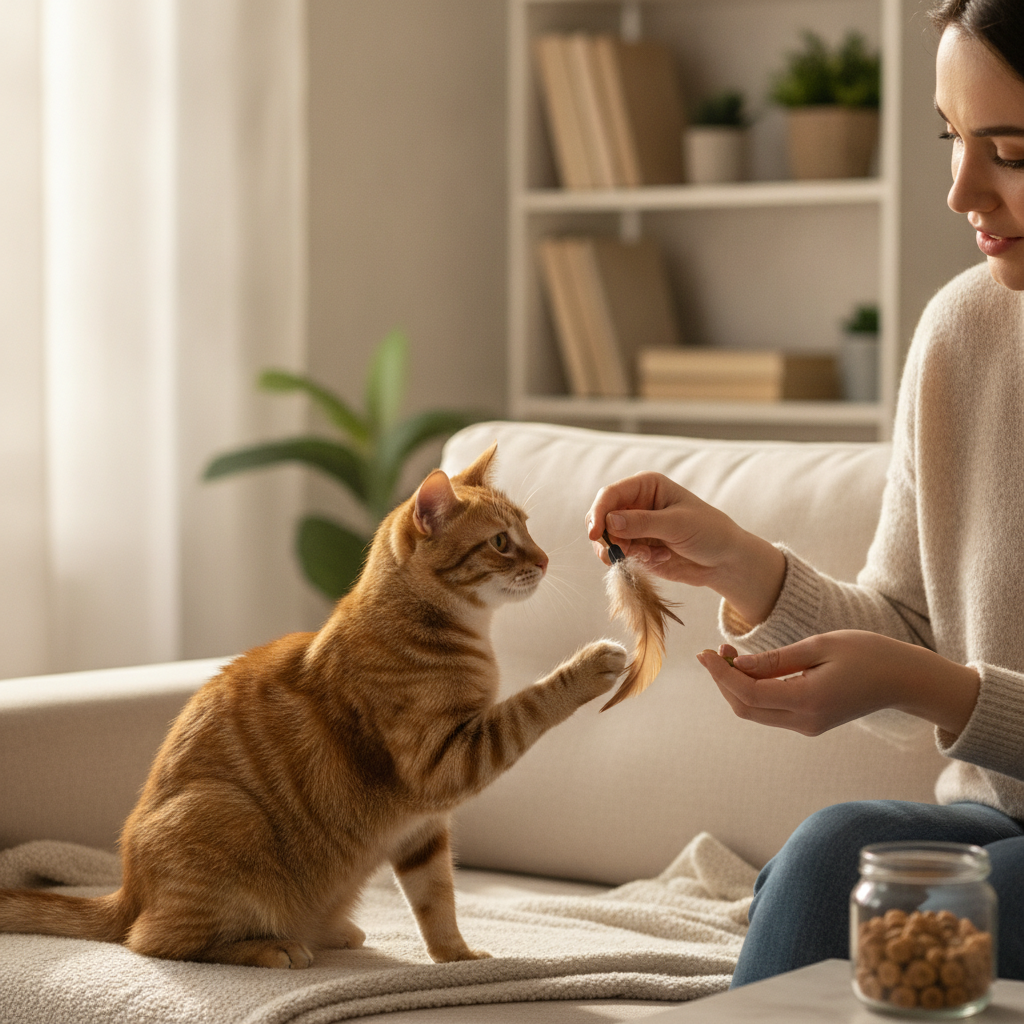
If a cat bites, pause movement and protect yourself without grabbing, pulling, or trying to pick up an agitated cat. Once the cat lets go, calmly end the interaction and give them space. Avoid shouting or physical punishment; these can increase fear and make aggression worse. For predictable play bites, have an appropriate toy ready before the next pounce rather than restarting play immediately after a bite.
If the bite breaks your skin, wash it immediately with warm soapy water. CDC guidance on cat bites advises medical attention if the wound is serious; becomes red, painful, warm, or swollen; the cat seems sick; its rabies vaccination status is unknown; or your last tetanus shot was more than five years ago. Do not wait for behavior training to address an injury.
How to Get Your Cat to Stop Biting
Use this plan consistently, and adjust it to the situation that sets off the bite:
- Record the trigger: Note the time, what happened just before the bite, and your cat’s body language. Play, petting, fear, and pain call for different responses.
- Prevent rough play: Keep fingers and toes out of games. Offer a wand, ball, or kicker toy at a distance before your cat usually ambushes you.
- End a bite calmly: Pause, withdraw attention when safe, and allow a cooling-off period. Do not pick up or punish an agitated cat.
- Reward gentle choices: During calm interactions, praise or treat your cat for playing with the toy, keeping teeth off skin, or accepting brief petting.
- Provide regular play: Try short, predictable sessions that suit your cat’s energy and stop before they become overstimulated.
- Ask about pain: Book a veterinary exam if biting is new, escalating, linked to a body area, or accompanied by other behavior changes.
Everyone in the household should use the same approach. Track whether bites become less frequent or less intense over time, and seek professional help if people remain at risk. For related signals, browse our cat and dog behavior guides.
Redirecting Playful Energy to Toys
For cats whose biting stems from play aggression, the solution lies in redirecting that natural hunting instinct toward appropriate outlets. Your hands and feet are not toys, and you need to teach your cat this distinction clearly.

Invest in a variety of interactive toys, especially wand toys with feathers, ribbons, or soft lures. These toys allow you to engage your cat in play from a safe distance, mimicking prey movements without involving your body parts. Kicker toys filled with catnip are also excellent for solo play, giving your cat something to “attack” and wrestle with using both their paws and teeth.
Build short, predictable play sessions around the times your cat is usually active. Let them chase and catch the toy, then stop before they become frustrated or overstimulated. There is no single schedule that fits every cat; consistency and safe distance from your hands matter more than a fixed number of minutes.
If your kitten is biting, early kitten socialization and play training are key. Always use toys for play and immediately disengage if they try to bite your hands. Consistent redirection from a young age helps them understand boundaries before bad habits become ingrained.
Managing Overstimulation During Petting
Petting-induced aggression is common, and it’s a clear signal that your cat needs you to respect their physical boundaries. The key is to learn your individual cat’s tolerance levels and cues.
Pay close attention to your cat’s body language while you are petting them. Watch for subtle signs of tension or discomfort: a tail beginning to flick or twitch, ears rotating backward or flattening, ripples along their back, skin twitching, a stiffening of their body, or pupils dilating. These are all indicators that they’re approaching their petting limit.
Stop petting before your cat reaches this threshold. If you consistently end the interaction on a positive note, before they feel the need to bite, they will learn to trust that you understand their needs. Keep petting sessions short and frequent rather than long and continuous.
Some cats prefer certain areas to be petted, often the cheeks, chin, and behind the ears, while others might dislike having their belly, paws, or the base of their tail touched. Experiment to find your cat’s “sweet spots” and stick to those. Gradually, your cat may learn to associate petting with comfort rather than irritation, leading to fewer instances of cat aggression behavior.
When to Consult a Veterinarian or Behaviorist
While most biting can be managed with behavioral adjustments, it’s crucial to rule out underlying medical causes, especially if the biting behavior is new, sudden, or significantly escalates.
A sudden change in temperament or an increase in aggression can be a sign of pain, illness, or cognitive dysfunction. Conditions like arthritis, dental pain, urinary tract infections, hyperthyroidism, or neurological issues can make a typically gentle cat irritable and prone to lashing out. Always schedule a visit with your veterinarian to rule out any medical reasons for the biting.
If your cat’s biting is persistent, severe, or poses a safety risk after medical issues have been ruled out, or if you feel overwhelmed, consider consulting a certified feline behaviorist. These professionals have specialized knowledge and can assess your cat’s unique situation, identifying complex triggers and developing a tailored behavior modification plan.
Frequently Asked Questions
Why does my cat bite me gently on the hand?
A gentle nip can occur during play or petting, but it does not prove affection. Look at the whole situation: a twitching tail, ears moving back, a tense body, or repeated head turns toward your hand may mean your cat wants the contact to stop. Pause petting and give them space. If the cat seeks play, use a toy rather than your fingers.
How can I stop my kitten from attacking my ankles?
Moving feet can trigger a kitten’s play-hunting behavior. Pause rather than kicking or picking up an excited kitten. When they disengage, use a wand or kicker toy at a safe distance, and plan short play sessions before the usual ambush time. Keep hands and feet out of games so the rule stays clear.
Does hissing at a cat work to stop biting?
Hissing at your cat is generally not recommended. While it might startle them or make them stop in the moment, it’s a negative form of communication that can confuse, frighten, or even anger your cat. This can damage your bond and potentially escalate fear-based aggression. It’s more effective to use positive reinforcement and redirection, teaching your cat what to do instead of punishing them for what you don’t want them to do.
Could my cat’s biting be caused by a medical issue?
Yes, absolutely. A sudden onset of biting or an increase in aggressive behavior, especially if unprovoked or accompanied by other behavioral changes, can certainly indicate an underlying medical problem. Pain from conditions like arthritis, dental disease, or even internal organ discomfort can make a cat irritable and defensive. It’s crucial to consult your veterinarian to rule out any health issues before assuming the problem is purely behavioral.
Stopping a cat from biting takes patience, consistency, and a keen understanding of their unique personality and communication. By identifying the triggers, responding appropriately in the moment, and providing suitable alternatives for their natural instincts, you can help your cat learn to interact gently. Building this trust and understanding will strengthen your bond and lead to a more harmonious household for years to come.