
Yes, dogs can eat apples! When prepared correctly, apples are a safe and healthy treat for many dogs. This crunchy fruit offers valuable nutrients like vitamins A and C, and a good dose of dietary fiber, making it a low-calorie snack option. However, it’s crucial to know which parts of the apple are safe and how to properly prepare them to avoid potential health risks. With a little care, you can share this refreshing snack with your canine companion.
If you are comparing occasional snacks, see whether eggs are safe for dogs and learn how regular activity fits into a healthy routine in our dog walking guide.
Table of Contents
Are Apples Safe for Dogs?
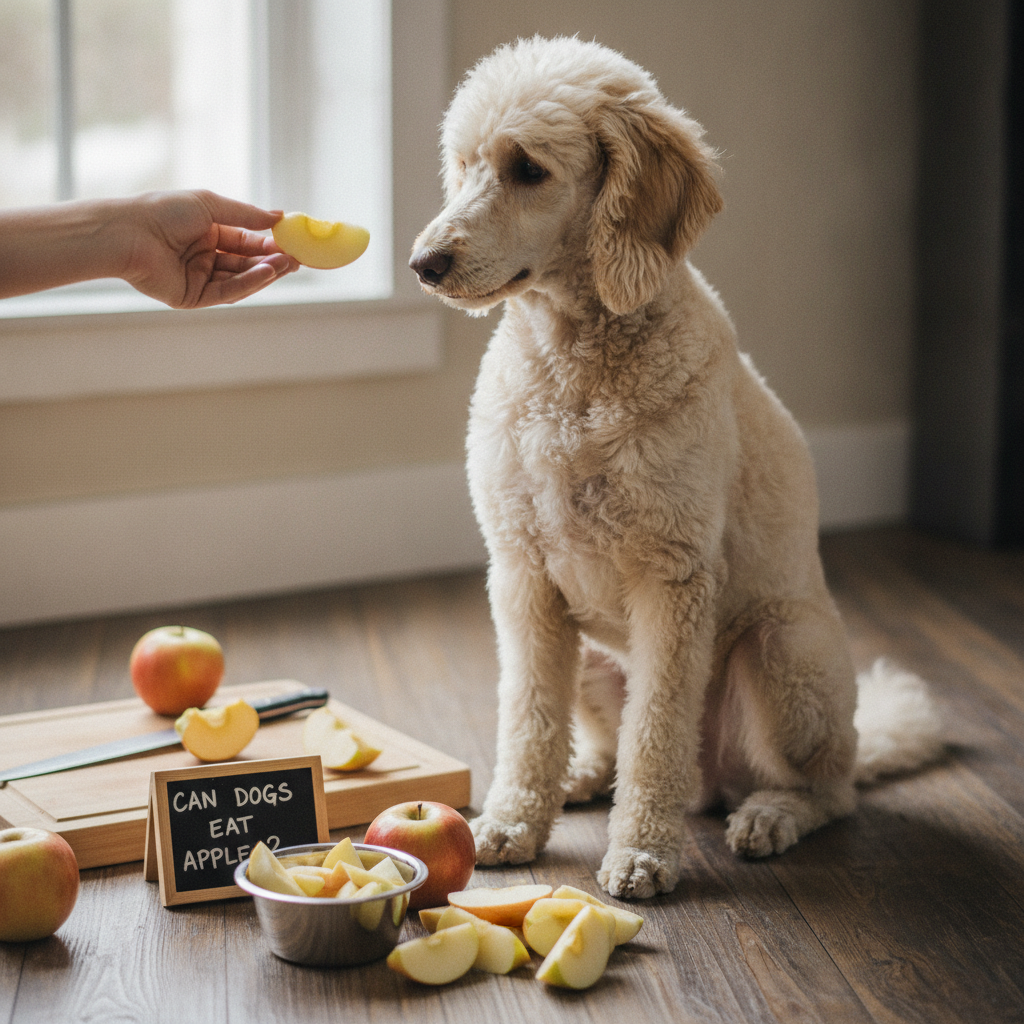
Generally speaking, apples are not only safe but also beneficial for dogs when offered thoughtfully. They are packed with essential vitamins such as A and C, which support immune function and healthy skin. Apples also provide dietary fiber, aiding in digestion and helping your dog feel full. Their satisfying crunch can even help clean your dog’s teeth, acting as a natural dental chew.
For most healthy dogs, a few slices of apple can be a wonderful, hydrating treat, especially on a warm day. The key is to serve them properly and in moderation.
The Parts of an Apple That Can Harm Dogs
While the fleshy part of an apple is safe, certain components pose risks to your dog’s health.
- Apple Seeds: These contain a compound called amygdalin, which releases cyanide when digested. While a single stray seed is unlikely to cause immediate harm, especially for a larger dog, consuming many seeds can be toxic. It’s always best to remove all seeds.
- Apple Core and Stem: The tough, fibrous apple core is a significant choking hazard, especially for smaller dogs or those who tend to gulp their food. The stem also poses a similar risk. Additionally, the core can be difficult for dogs to digest and may lead to intestinal blockage if swallowed in large pieces.
To ensure your dog’s safety, always remove the core, stem, and all seeds before sharing an apple.
How to Properly Prepare Apples for Your Dog
Getting an apple ready for your dog is simple, but these steps are important for their safety and digestive comfort:
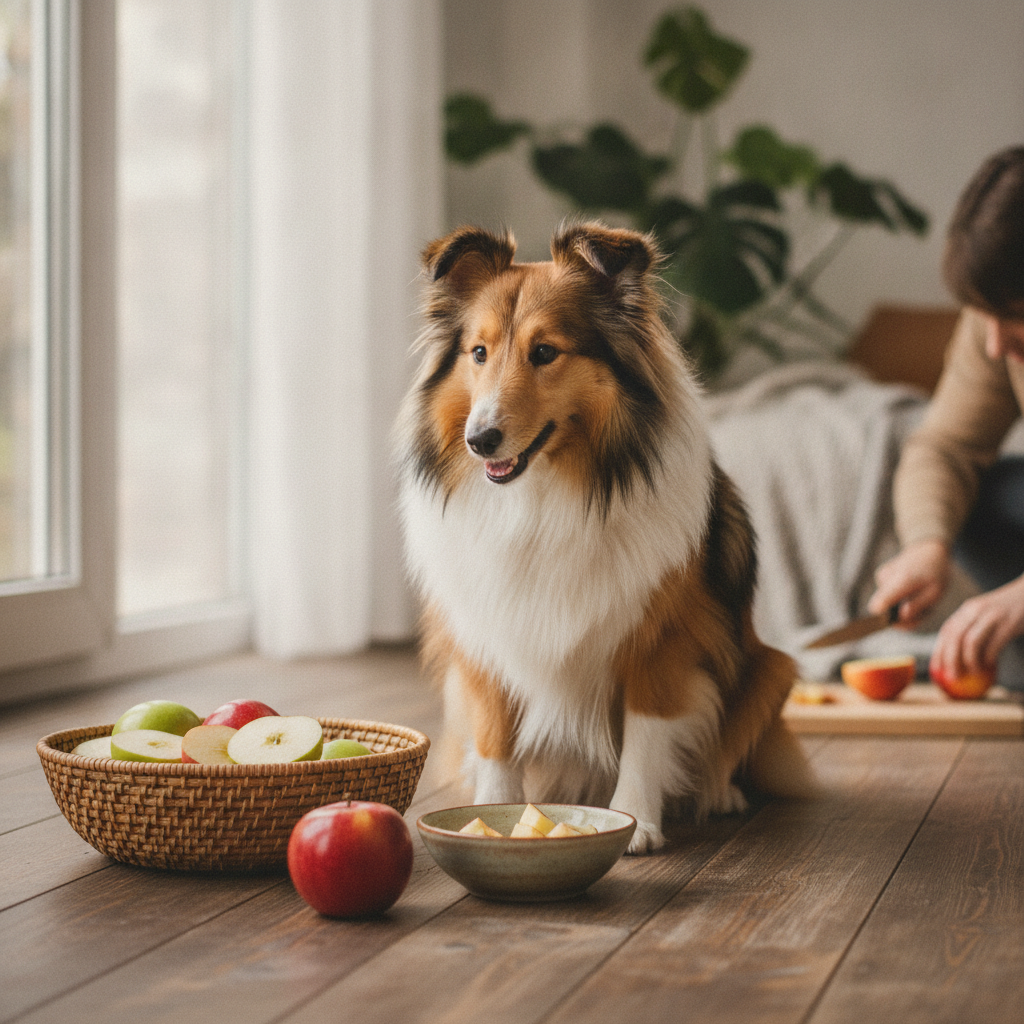
- Wash the Apple Thoroughly: Always wash the apple under running water to remove any pesticides, dirt, or wax that might be on the skin.
- Peel the Skin (Optional): Apple skin is generally safe for dogs and contains extra fiber and nutrients. However, if your dog has a sensitive stomach or is prone to digestive upset, peeling the apple can make it easier to digest. Clean, organic apple skin is usually fine in moderation for most dogs.
- Core and Seed Completely: Carefully cut out the entire core, removing all seeds and the stem. This is the most critical step to prevent choking and toxin exposure.
- Slice into Bite-Sized Pieces: Cut the apple flesh into small, manageable pieces appropriate for your dog’s size. For a small dog, tiny cubes are best; for a large dog, slightly larger slices are fine, but ensure they are not so big they could cause choking.
You can offer these fresh slices as a treat, or even freeze small pieces for a refreshing, longer-lasting chew.
Portion Guide: How Much Apple Can Dogs Eat?
Moderation is key when introducing any new food, including apples, into your dog’s diet. Treats should never make up more than 10% of your dog’s total daily caloric intake. The bulk of their calories should come from a balanced, high-quality dog food.
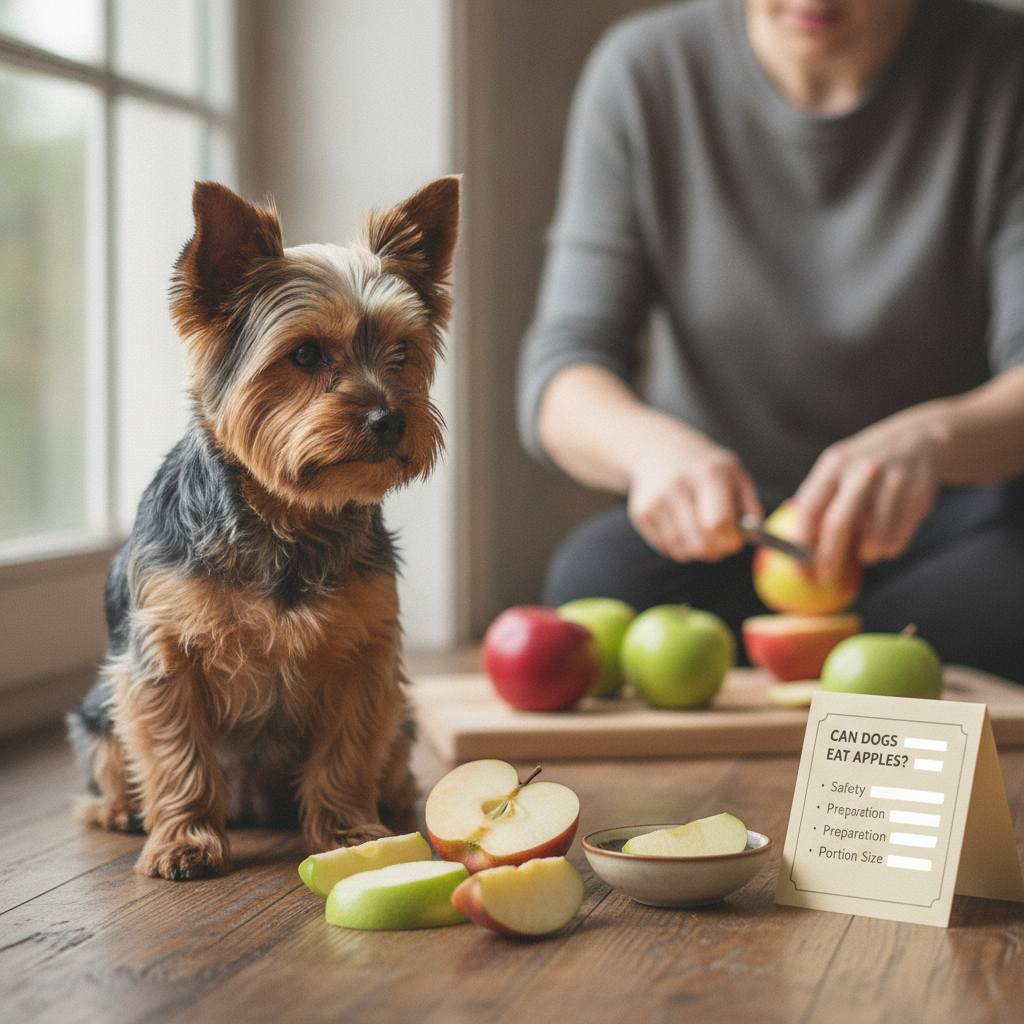
- Start Small: Begin by offering just a single small slice of apple to see how your dog’s digestive system reacts. Some dogs may be more sensitive to new foods, especially those high in fiber or natural sugars.
- Monitor for Reactions: Watch for any signs of stomach upset, such as diarrhea, vomiting, or excessive gas, over the next 24 hours. If your dog tolerates it well, you can gradually increase the amount.
- General Guideline: For most medium-sized dogs, a few small slices (perhaps a quarter of a small apple) a few times a week is a reasonable amount. Smaller dogs will need even less, while very large dogs can handle a bit more, but always stay within the 10% treat rule.
Feeding too much apple too quickly can lead to mild digestive upset or diarrhea due to its natural sugar and fiber content.
When to Call the Veterinarian
While apples are generally safe, accidents can happen, and sometimes dogs react unexpectedly to new foods. It’s important to know when to seek professional advice.
- Choking Signs: If your dog accidentally swallows a large piece of apple, a core, or a stem, watch immediately for signs of choking. These can include excessive drooling, pawing at the mouth, frantic coughing, gagging, or difficulty breathing. If you suspect your dog is choking, seek emergency veterinary care immediately.
- Gastrointestinal Distress: If your dog eats a large amount of apple skin, core, or seeds, or simply has a bad reaction to the fruit, monitor them closely. Symptoms like persistent vomiting, lethargy, severe diarrhea, loss of appetite, or abdominal pain warrant a call to your veterinarian.
- Unusual or Persistent Symptoms: Any unusual symptoms or those that persist for more than a day should prompt a consultation with your veterinarian. They can provide guidance and rule out any serious underlying issues or obstructions.
Frequently Asked Questions About Apples and Dogs
Can dogs eat apple skin?
Yes, dogs can generally eat apple skin. It contains extra fiber and nutrients. However, it’s crucial to wash the apple thoroughly to remove pesticides. If your dog has a very sensitive stomach, peeling the apple might be a good idea to prevent potential mild digestive upset from the fiber.
Can dogs drink apple juice or apple cider?
It’s best to avoid giving dogs apple juice or apple cider. These beverages are highly concentrated in sugar, which can lead to digestive upset, dental problems, and contribute to weight gain. Furthermore, some commercial juices may contain artificial sweeteners like xylitol, which is highly toxic to dogs.
Are cooked or baked apples safe for dogs?
Yes, plain cooked or baked apples are safe for dogs, provided they are prepared without any added sugars, spices (like nutmeg, which can be toxic), butter, or other ingredients that are unhealthy or unsafe for dogs. Ensure they are cored, seeded, and cut into small, digestible pieces.
Can dogs with diabetes eat apples?
Apples do contain natural sugars, so if your dog has diabetes, you should consult your veterinarian before offering them any apple. In very small, controlled amounts, they might be acceptable, but your vet can provide specific guidance based on your dog’s individual health plan and glucose management needs.
Sharing a piece of apple with your dog can be a lovely way to bond and offer a healthy treat. By remembering to remove the core and seeds, cutting it into appropriate sizes, and practicing moderation, you can safely let your dog enjoy this crunchy, nutritious snack.